How to Identify Heavy-Duty Videoscope Inspection Conditions and Use Probes Safely
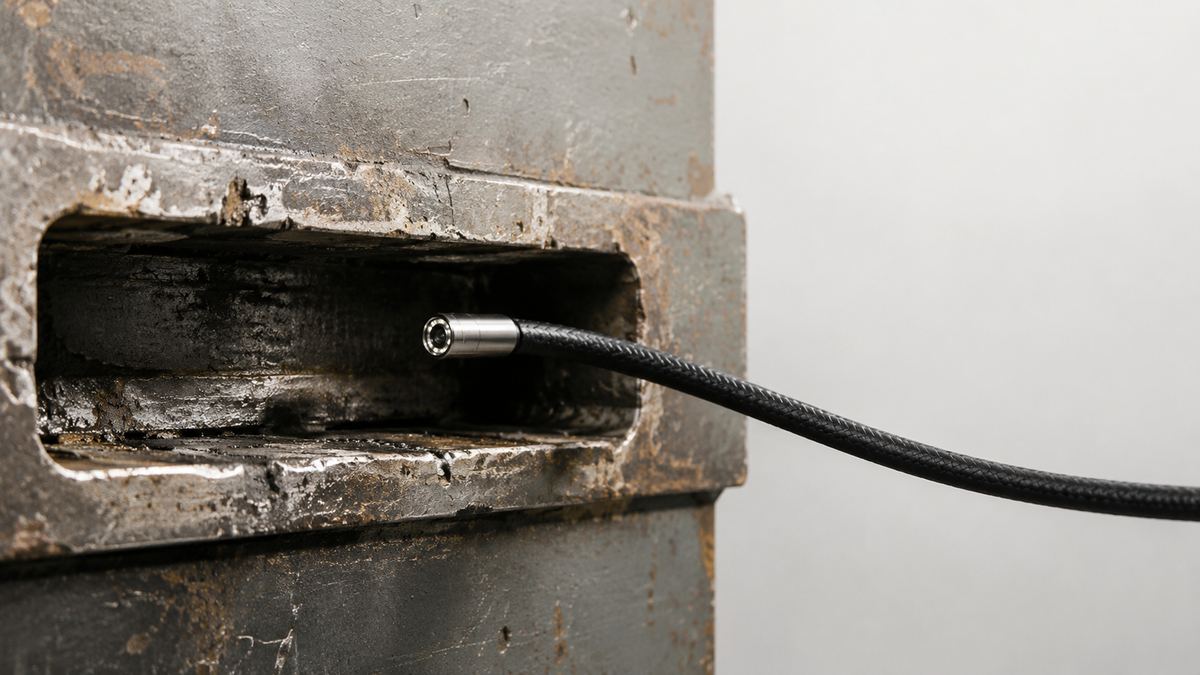
Learn how to identify heavy-duty videoscope inspection environments, understand common probe damage risks, and follow practical handling tips to improve probe lifetime in demanding industrial applications.
How to Identify Heavy-Duty Videoscope Inspection Conditions and Use Probes Safely
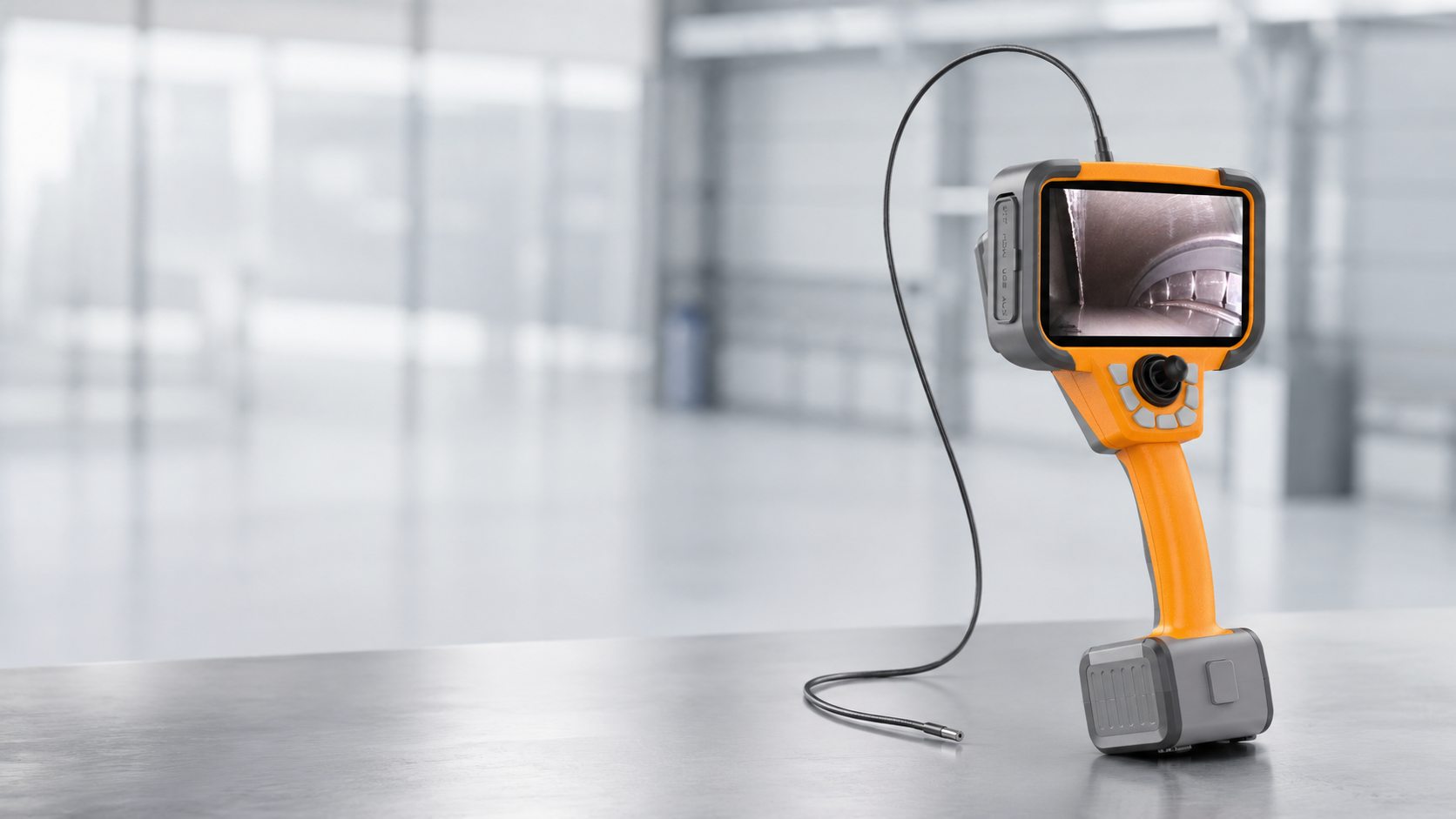
Industrial videoscopes are widely used to inspect areas that cannot be seen directly, such as internal channels, welded pipes, gearboxes, turbine components, castings, hydraulic manifolds and engine parts. In many applications, the inspection is relatively straightforward: the probe is inserted into a clean and open space, the operator observes the target, records images or videos, and removes the probe safely.
However, not all inspection environments are the same. Some applications should be considered heavy-duty videoscope inspection conditions. In these cases, the probe is exposed to repeated bending, friction, sharp edges, narrow passages, contamination, high operating frequency or difficult insertion paths. These conditions significantly increase the risk of probe wear, bending section fatigue, image failure, illumination failure or articulation damage.
Understanding whether an application is heavy-duty is important before choosing a videoscope probe. It helps the user select the correct probe diameter, length, articulation type, protective design and operating method. It also helps set realistic expectations for probe lifetime, maintenance and inspection reliability.
1. What Does “Heavy-Duty” Mean in Videoscope Inspection?
In videoscope inspection, “heavy-duty” does not simply mean that the inspected object is large or industrial. It refers to inspection conditions that place high mechanical, thermal, chemical or operational stress on the probe.
A heavy-duty inspection environment usually includes one or more of the following characteristics:
Frequent daily or repeated use.
Long inspection cycles with many insertion and retraction movements.
Narrow channels with limited clearance around the probe.
Rough, abrasive or contaminated internal surfaces.
Sharp edges, burrs, holes, grooves or weld roots inside the inspection path.
Multiple bends, junctions or direction changes.
Repeated articulation under resistance.
Need to push the probe through friction or obstruction.
Oil, water, dust, metal chips, carbon deposits or chemical residue.
Inspection performed in maintenance conditions where the internal path is not clean or predictable.
If a probe needs to be forced, twisted, repeatedly bent, scraped along a rough wall or used many times per day, the application should be treated as heavy-duty.
2. Heavy-Duty Is Mainly About Probe Stress
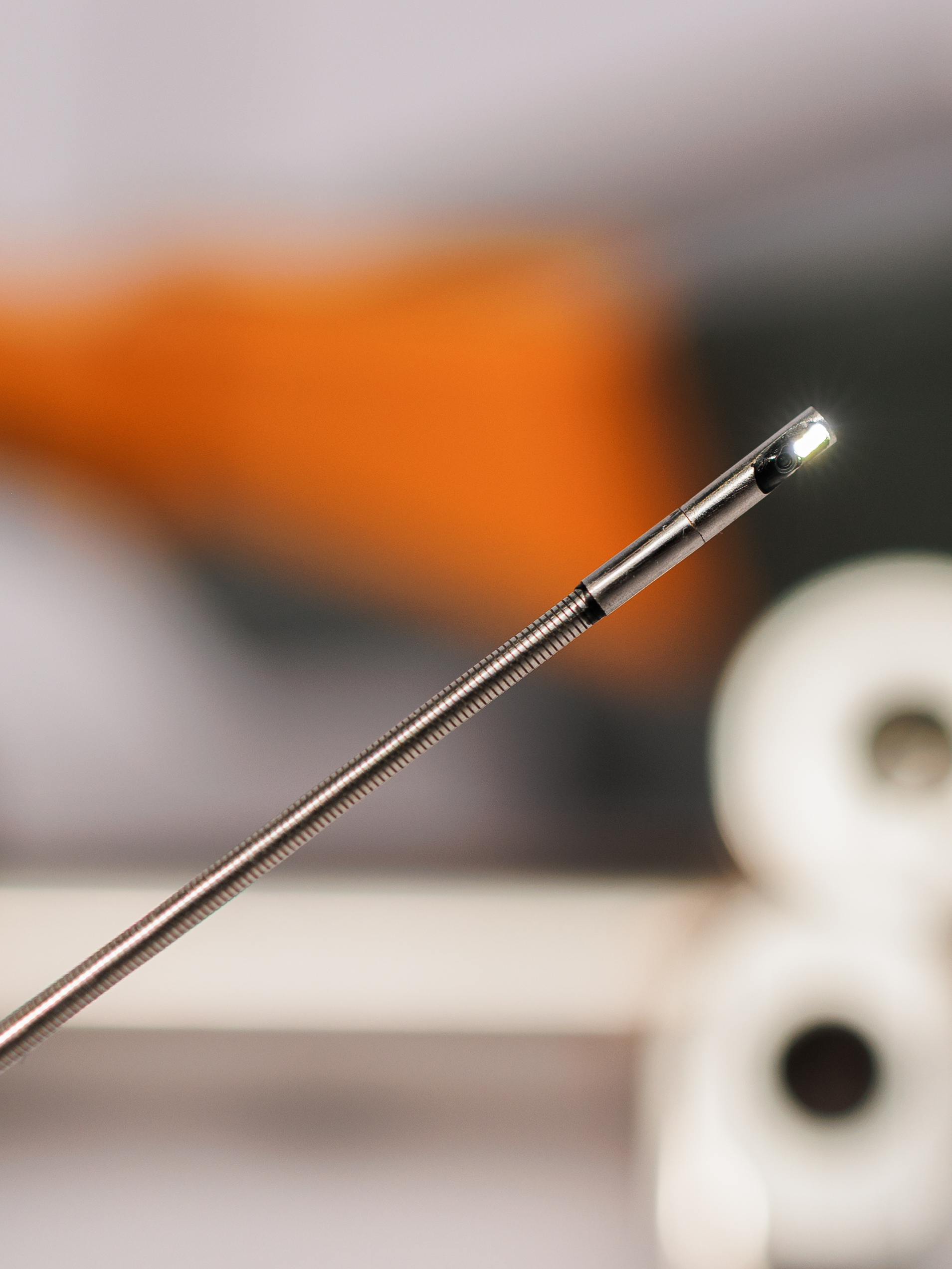
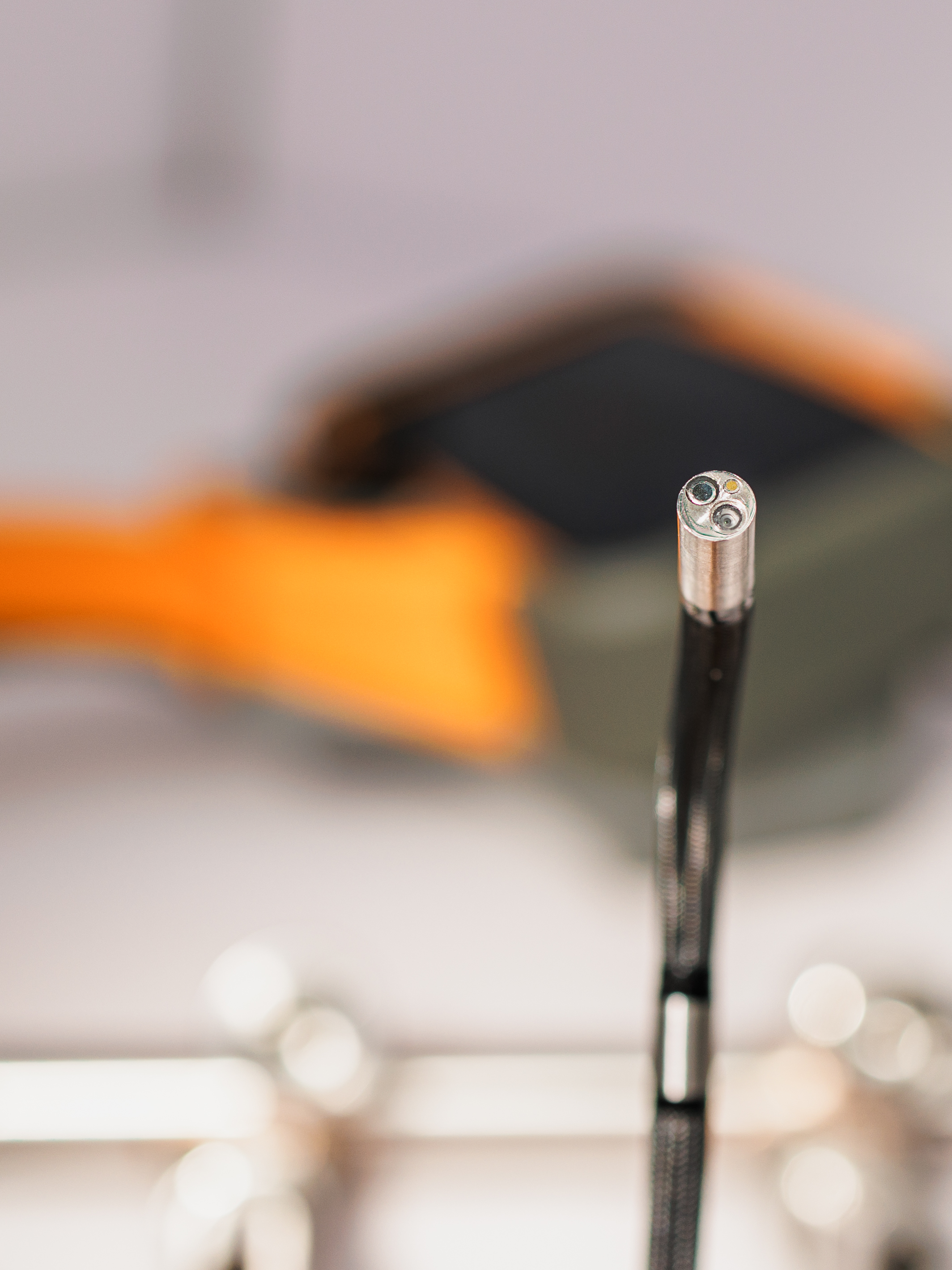
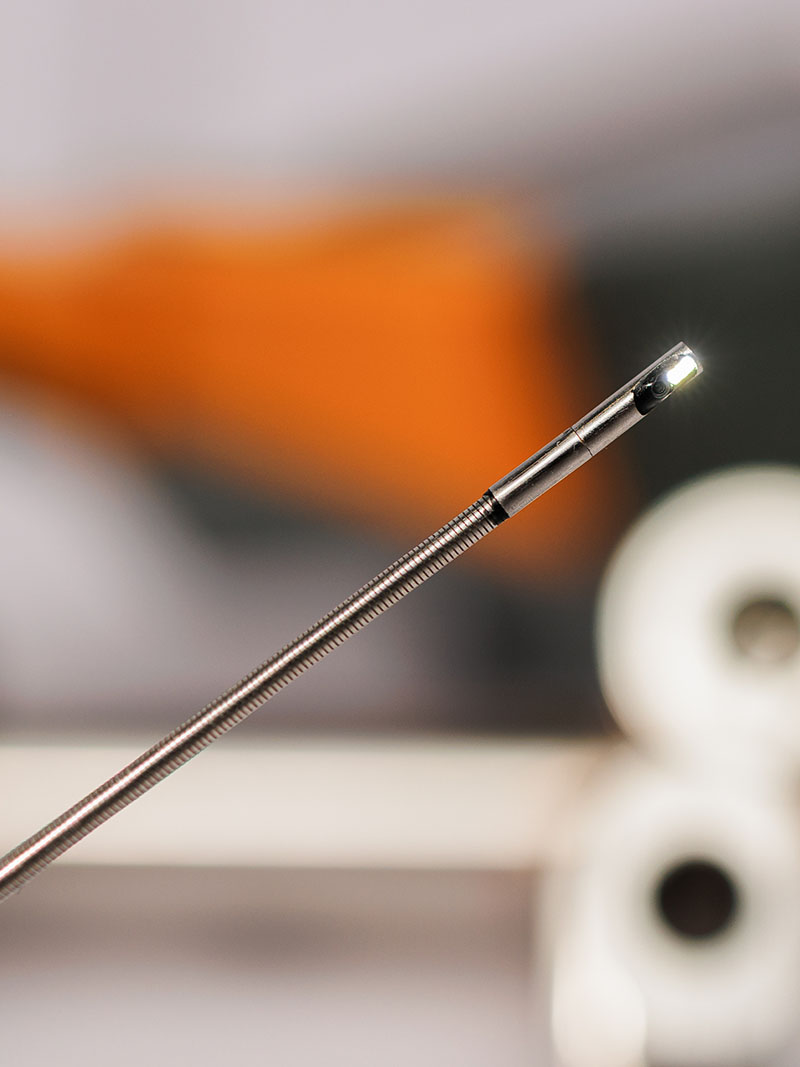
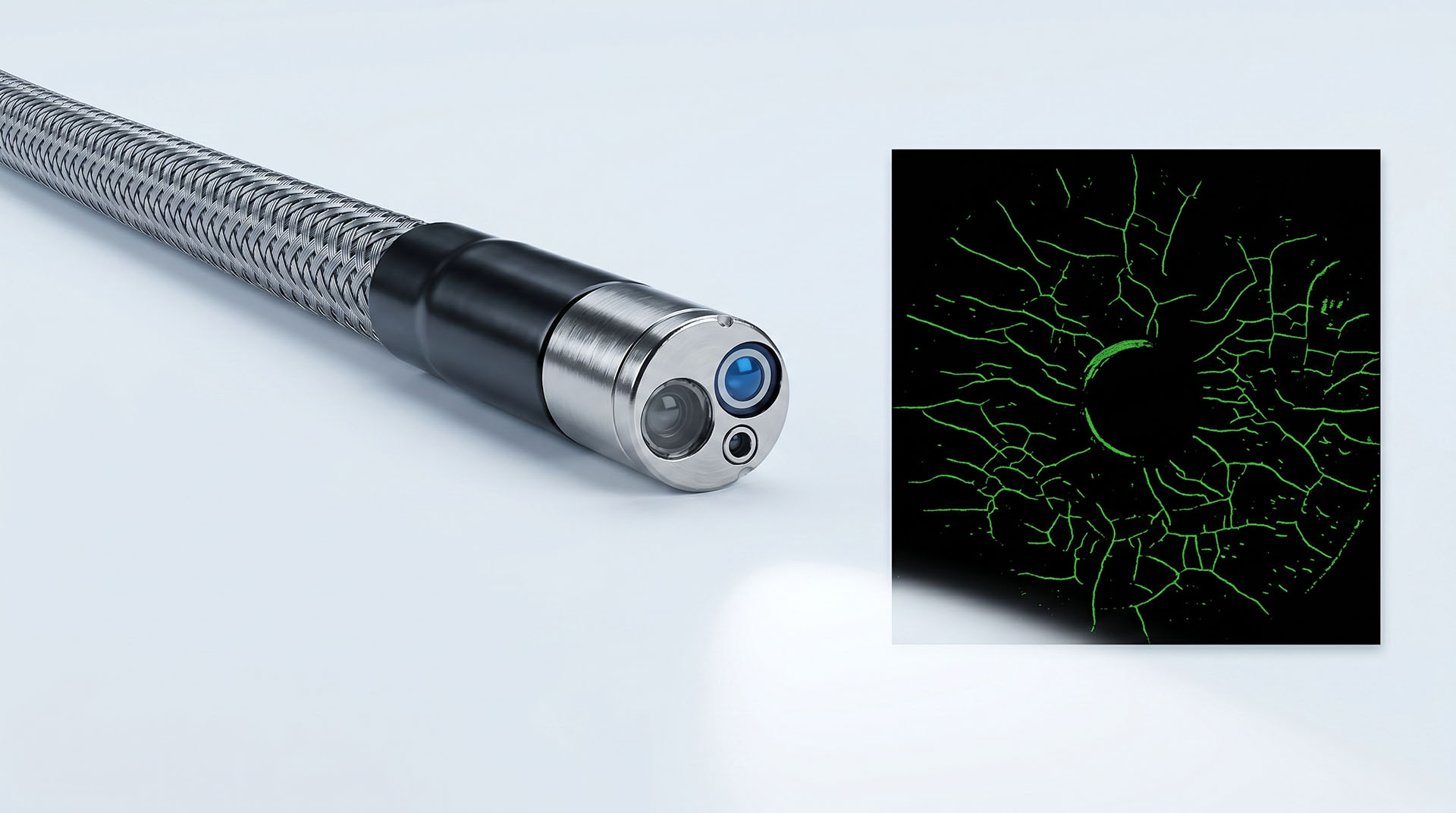
For most videoscope systems, the main unit is usually not the weakest part of the system. The probe is exposed directly to the inspection environment. It contains several delicate components within a very small diameter, including a camera module, illumination path, electrical wires, bending section, articulation wires, outer sheath and distal tip.
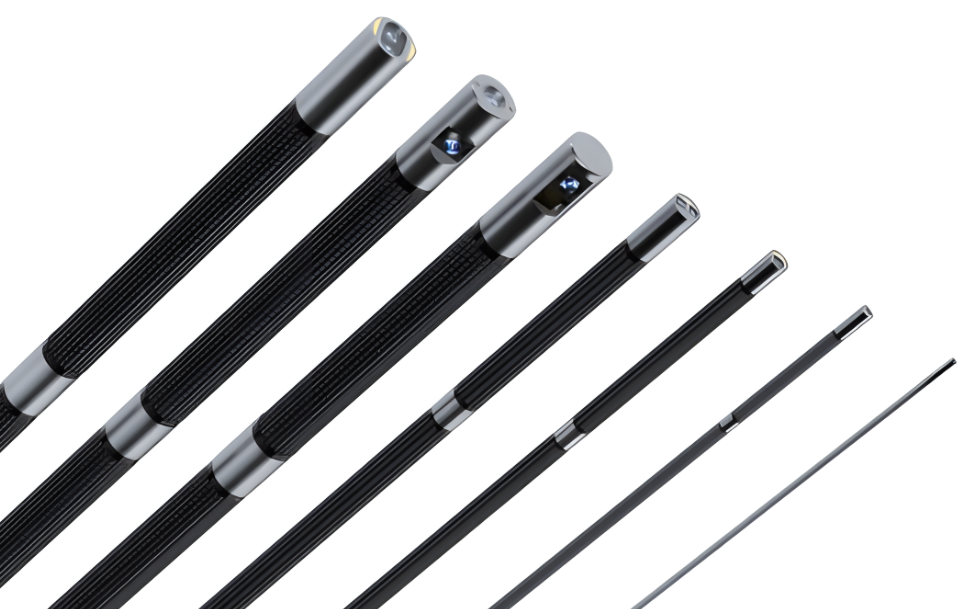
The smaller the probe diameter, the less internal space is available for mechanical protection. This means that small-diameter probes can inspect smaller openings, but they are usually more sensitive to mechanical stress than larger probes.
In heavy-duty applications, probe damage is often caused not by a single accident, but by repeated accumulated stress. A probe may work normally for many inspections, but fatigue can build up over time at the bending section, distal tip, sheath or connection area.
3. Typical Heavy-Duty Application Examples
| Application | Why It Can Be Heavy-Duty | Main Risk to the Probe |
|---|---|---|
| Rough internal channels | Repeated friction against hard or uneven surfaces | Outer sheath wear, bending section damage |
| Small bore tubes | Very limited clearance around the probe | High friction, difficult retraction, tip scratches |
| Gearbox inspection | Oil, gears, sharp edges and complex internal structures | Tip impact, contamination, articulation stress |
| Weld root inspection | Weld edges, burrs and narrow access | Scratching, sheath damage, lighting contamination |
| Hydraulic manifold inspection | Small passages and intersecting holes | Tip collision, bending section fatigue |
| Casting inspection | Rough surfaces, sand residue and irregular geometry | Abrasion, dust contamination, image obstruction |
| Daily production inspection | High frequency operation | Accumulated mechanical fatigue |
| Long probe insertion | More friction over longer distance | Difficult handling, reduced control, sheath wear |
4. Warning Signs That an Application Is Heavy-Duty
Before selecting a probe, users should evaluate the real inspection path, not only the opening size. The following signs usually indicate a heavy-duty condition:
The operator must push hard to advance the probe.
The probe repeatedly touches rough internal walls.
The inspection path includes several bends or branches.
The probe tip often gets stuck or caught.
The operator needs strong articulation while the probe is under friction.
The probe is used daily or multiple times per shift.
The internal surface contains burrs, chips, weld edges or sharp corners.
The probe must be inserted deeply into a long narrow channel.
The inspected part contains oil, water, dust, carbon deposits or metal particles.
The probe must be rotated, pulled or redirected frequently during inspection.
If several of these signs appear together, the inspection should not be treated as a light-duty application. Probe selection and handling methods should be adjusted accordingly.
5. Why Small-Diameter Probes Need Extra Care
Small-diameter videoscope probes are extremely useful for inspecting narrow openings and small internal passages. However, they also have less internal space for mechanical reinforcement. A 1 mm, 1.2 mm, 1.8 mm or 2.4 mm probe cannot have the same mechanical strength as a larger 4 mm or 6 mm probe.
Small probes may be more sensitive to:
Excessive bending.
Repeated twisting.
Tip impact.
Scratching against sharp internal edges.
Pulling or pushing under high friction.
Articulation force applied while the probe is blocked.
Damage to fiber illumination or internal signal wires.
When the inspection path is rough or narrow, choosing the smallest possible probe is not always the safest solution. A slightly larger probe with better mechanical strength may be more suitable if the access size allows it.
6. Articulation Risks in Heavy-Duty Use
Articulation is one of the most useful functions of an industrial videoscope. It allows the operator to steer the distal tip and observe different directions inside the component. However, the bending section is also one of the most stressed areas of the probe.
In heavy-duty applications, articulation risk increases when:
The bending section is pushed against a wall while steering.
The probe is articulated inside a narrow tube with little clearance.
The operator continues steering after the tip is blocked.
The probe is pulled back while the tip is still bent.
The bending section repeatedly contacts sharp edges or rough surfaces.
The probe is used for a high number of inspection cycles every day.
Good practice is to keep the probe as straight as possible during insertion and retraction. Articulation should be used mainly for observation and positioning, not as a force tool to push the probe through an obstruction.
7. Probe Diameter Selection for Heavy-Duty Conditions
Probe diameter should not be selected only based on the smallest opening. The user should also consider clearance, surface roughness, inspection length and required maneuverability.
| Selection Factor | Why It Matters | Practical Guidance |
|---|---|---|
| Opening size | The probe must physically enter the inspection area. | Do not choose a probe that has almost no clearance unless absolutely necessary. |
| Clearance | Low clearance increases friction and risk of getting stuck. | Allow enough space for safe insertion, bending and retraction. |
| Surface roughness | Rough surfaces wear the outer sheath faster. | Use a more robust probe or protective sleeve if possible. |
| Inspection length | Longer insertion increases friction and reduces control. | Avoid unnecessary probe length; choose only what the application requires. |
| Articulation requirement | Steering under resistance increases bending section stress. | Confirm whether articulation is truly needed and how often it will be used. |
| View direction | Forward view, side view and dual camera have different use cases. | Choose the view direction based on the target, not only on general preference. |
8. Probe Length Selection in Heavy-Duty Applications
Longer probes are not always better. A longer probe may provide more reach, but it also increases handling difficulty, friction, insertion resistance and the risk of damage. In heavy-duty conditions, unnecessary length can make the inspection harder and reduce control over the distal tip.
Before choosing a long probe, users should confirm:
How deep the target area really is.
Whether the full probe length needs to enter the component.
Whether the path is straight or contains bends.
Whether the operator can safely push and retrieve the probe.
Whether the lighting is sufficient at the required distance.
Whether articulation is still effective at the working length.
For difficult industrial applications, the best probe length is usually the shortest length that can reliably reach the target area.
9. Protective Sleeves and Reinforced Designs
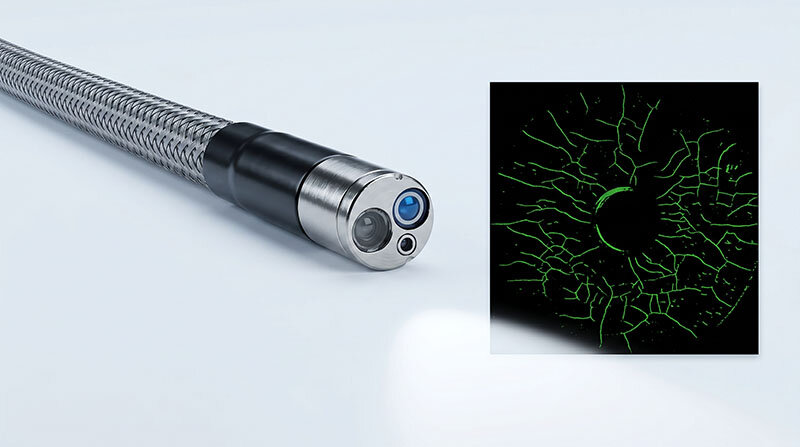
In some heavy-duty applications, a protective sleeve or reinforced outer sheath can help reduce wear. For example, a tungsten braided layer, stainless-steel protective spring or additional outer sleeve may improve resistance against abrasion and repeated contact.
However, protection always involves trade-offs:
The outer diameter may increase.
The probe may become less flexible.
Insertion into narrow passages may become more difficult.
Articulation angle may be reduced.
The distal tip may still remain vulnerable to impact.
Protective design can improve durability, but it cannot make a delicate probe indestructible. The inspection method and operator handling remain critical.
10. Important Use Precautions for Videoscope Probes
The following handling precautions are especially important in heavy-duty applications:
Do not force the probe if it cannot move forward smoothly.
Do not use articulation to push through an obstruction.
Do not pull the probe back while the distal tip is fully bent.
Do not twist the probe sharply while it is inside a narrow passage.
Do not drag the distal tip across sharp edges if avoidable.
Do not exceed the minimum bending radius of the probe.
Do not insert the probe into a hot component beyond the rated temperature.
Do not expose the probe to chemicals outside its protection rating.
Do not continue inspection if the image, lighting or articulation becomes abnormal.
Clean and inspect the probe after use, especially after contact with oil, dust or metal particles.
If the probe meets strong resistance, the safest action is usually to stop, retract slightly, change angle and try again gently. Forcing the probe forward may save a few seconds, but it can cause expensive damage.
11. Before Inspection: Heavy-Duty Checklist
Before starting inspection, operators should check the application and equipment carefully.
| Check Item | Question to Ask |
|---|---|
| Access size | Is there enough clearance for the probe diameter? |
| Internal path | Is the path straight, curved, branched or obstructed? |
| Surface condition | Are there rough surfaces, burrs, chips or sharp edges? |
| Contamination | Is there oil, water, dust, carbon or metal particles? |
| Required reach | Is the selected probe length really necessary? |
| Articulation need | Does the inspection require active steering? |
| Temperature | Is the inspected area within the probe temperature rating? |
| Protection | Is a reinforced sheath or protective sleeve needed? |
| Backup plan | Is a backup probe needed for high-frequency inspection? |
12. During Inspection: Good Operating Practice
During inspection, the operator should use controlled and gentle movements. Heavy-duty inspection is not only about equipment strength; it is also about operating discipline.
Insert the probe slowly and observe the image continuously.
Keep the probe as straight as possible during insertion.
Use articulation only when the tip has enough space to move.
Release articulation before pulling the probe back.
Use small movements instead of sudden pushing or twisting.
Stop immediately if the probe becomes stuck.
Avoid using the probe tip as a mechanical tool.
Record abnormal friction points for future inspection planning.
For repeated inspections of the same part, it is useful to document the safest insertion path and train operators to follow the same method.
13. After Inspection: Cleaning and Damage Check
After heavy-duty inspection, the probe should be cleaned and checked before storage. Contamination left on the probe may affect future image quality, illumination, articulation and sealing performance.
Recommended post-inspection checks include:
Wipe the insertion tube carefully with a suitable cleaning cloth.
Remove oil, dust, carbon or metal particles from the probe surface.
Check the distal tip for scratches, dents or contamination.
Check the outer sheath for cuts, broken wires, abrasion or swelling.
Check whether articulation is smooth and symmetrical.
Check whether the image is stable and clear.
Check whether illumination is normal.
Store the probe without sharp bends or pressure points.
If any abnormality is found, the probe should not be used for critical inspection before further checking. Continuing to use a damaged probe may worsen the failure and increase repair cost.
14. How to Extend Probe Lifetime in Heavy-Duty Applications
Probe lifetime depends on application severity, probe design and operator handling. The following practices can help extend service life:
Choose the largest practical probe diameter instead of the smallest possible diameter.
Use the shortest practical probe length for the application.
Avoid forcing the probe through high-friction paths.
Use protective sleeves when clearance allows.
Train operators on correct insertion, articulation and retraction.
Clean the probe after each heavy-duty inspection.
Inspect the probe regularly for early signs of wear.
Keep a backup probe for high-frequency production inspection.
Separate heavy-duty inspection tools from delicate precision inspection tools.
Record damage history and adjust the inspection method if the same failure repeats.
15. Realistic Expectations for Heavy-Duty Inspection
In demanding applications, videoscope probes should be understood as precision inspection tools, not mechanical pushing tools. Even a reinforced probe has limits. If the application involves high friction, sharp edges, repeated bending or daily intensive use, wear and repair risk will naturally increase.
This does not mean that videoscopes are unsuitable for heavy-duty inspection. It means that probe selection, handling method and maintenance planning must match the real working condition.
For high-frequency industrial inspection, users should consider spare probes, regular maintenance and operator training as part of the inspection process. This can reduce downtime and make inspection results more stable.
16. Practical Summary
A heavy-duty videoscope inspection condition is defined by the stress applied to the probe. Narrow access, rough internal surfaces, repeated bending, sharp edges, contamination and high-frequency use all increase the risk of probe damage.
The most important rule is simple: select the probe according to the real inspection path, not only the opening diameter. A probe that can enter the hole is not always the best probe for safe and repeatable inspection.
Good videoscope practice requires careful probe selection, gentle operation, correct articulation use, regular cleaning and realistic maintenance planning. When these factors are controlled properly, industrial videoscopes can provide reliable inspection results even in demanding heavy-duty environments.
FAQ: Heavy-Duty Videoscope Inspection
What is a heavy-duty videoscope inspection condition?
A heavy-duty condition is an inspection environment that places high stress on the probe, such as narrow access, rough surfaces, sharp edges, repeated bending, contamination or frequent daily use.
Why are small-diameter probes more fragile?
Small-diameter probes have less internal space for mechanical reinforcement. They can inspect smaller openings, but they are usually more sensitive to bending, friction, impact and twisting.
Can a protective sleeve prevent all probe damage?
No. A protective sleeve can reduce abrasion and improve durability, but it cannot prevent all damage. It may also increase diameter and reduce flexibility.
Should I always choose the smallest probe that fits?
No. The smallest probe is not always the best choice. If the access allows it, a larger and more robust probe may provide better durability and easier handling.
Why does articulation fail in heavy-duty use?
Articulation can be damaged when the bending section is forced against resistance, used inside a tight passage, pulled back while bent, or repeatedly stressed during high-frequency inspection.
How can I reduce probe damage during inspection?
Do not force the probe, keep it as straight as possible during insertion, release articulation before retraction, avoid sharp edges, clean the probe after use and inspect it regularly for wear.
Is a long probe more difficult to use?
Yes. Longer probes usually create more friction, are harder to control and may be more difficult to insert and retrieve, especially in narrow or curved paths.
When should I consider a backup probe?
A backup probe is recommended for high-frequency production inspection, critical maintenance work, or heavy-duty applications where probe damage would cause significant downtime.
What should I check after heavy-duty inspection?
Check the distal tip, outer sheath, image quality, illumination, articulation movement and any signs of abrasion, cuts, broken wires or contamination.
Can videoscopes be used in heavy-duty environments?
Yes, but the probe selection, operating method and maintenance plan must match the real working conditions. Heavy-duty inspection requires careful handling and realistic expectations for probe lifetime.