Videoscope FAQ
Find answers about industrial videoscopes, including probe options, image quality, articulation, inspection applications, maintenance, repair, and how to choose the right system.
Industrial Videoscope FAQ
Industrial videoscopes are widely used for remote visual inspection (RVI) in aerospace, automotive, power generation, manufacturing, and industrial maintenance.
This FAQ section answers some of the most common questions about industrial videoscope systems, probe selection, applications, maintenance, and inspection technology.
General Videoscope Questions
What is an industrial videoscope?
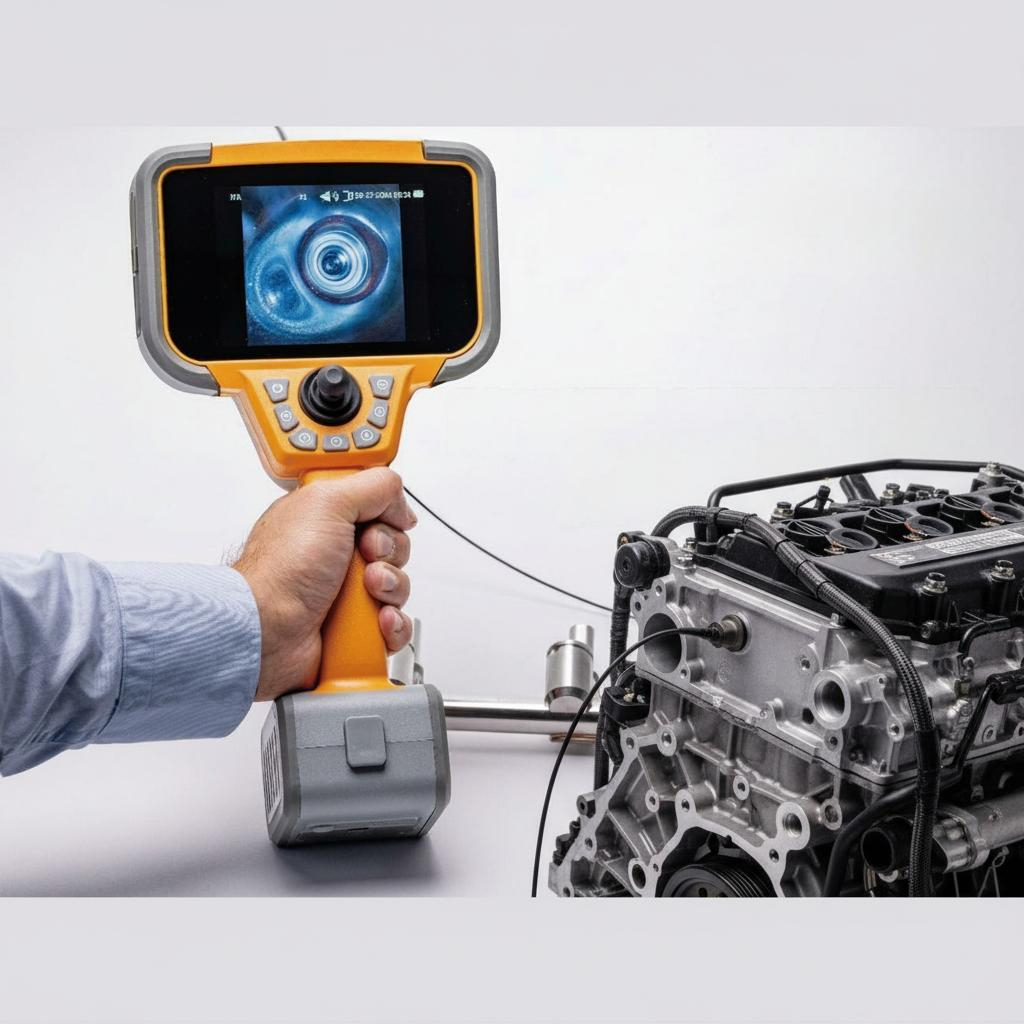
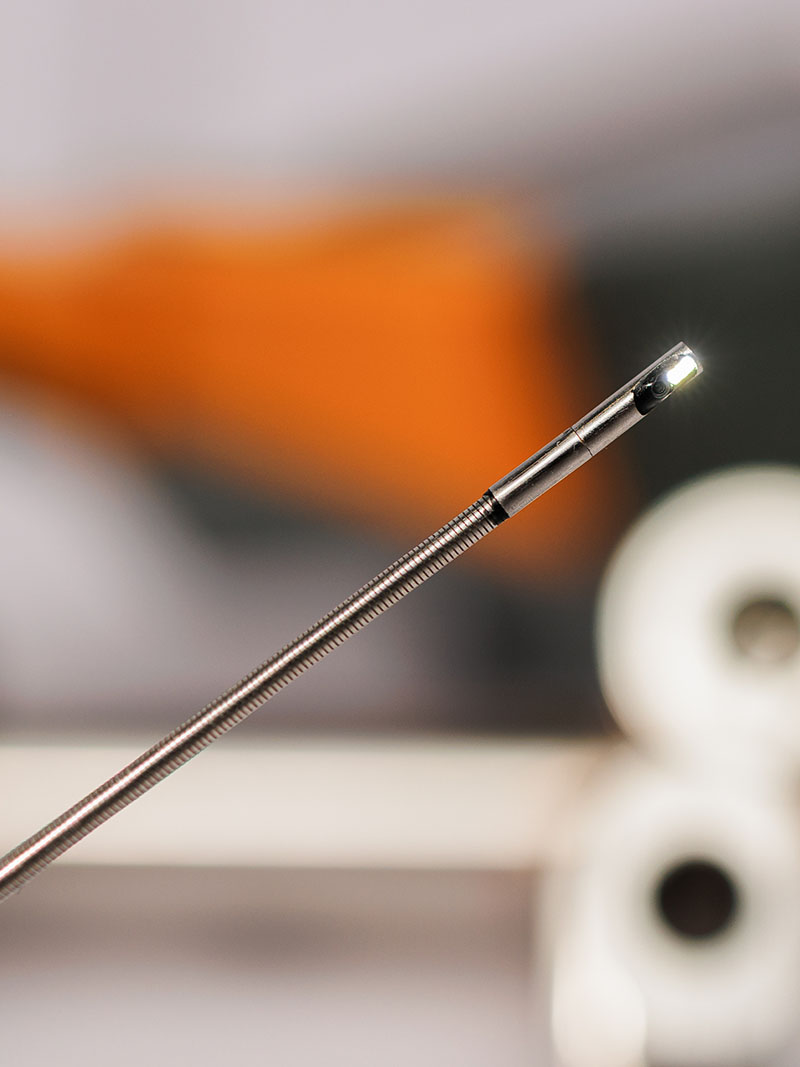
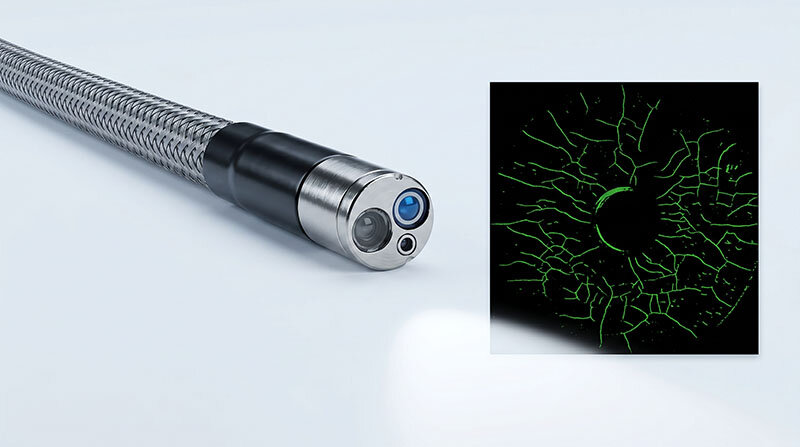
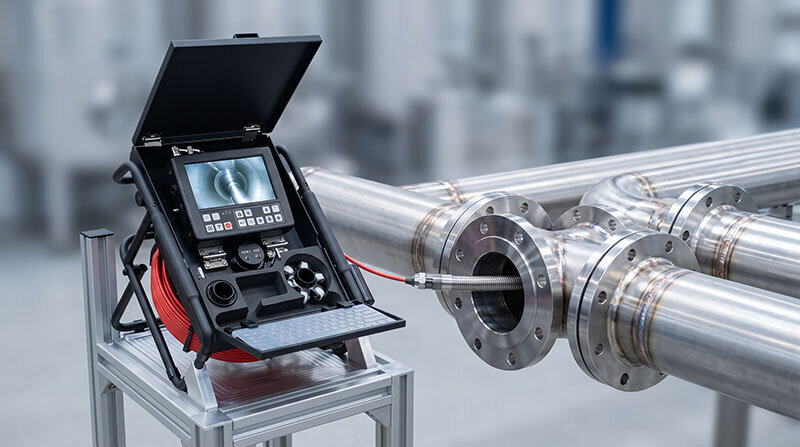
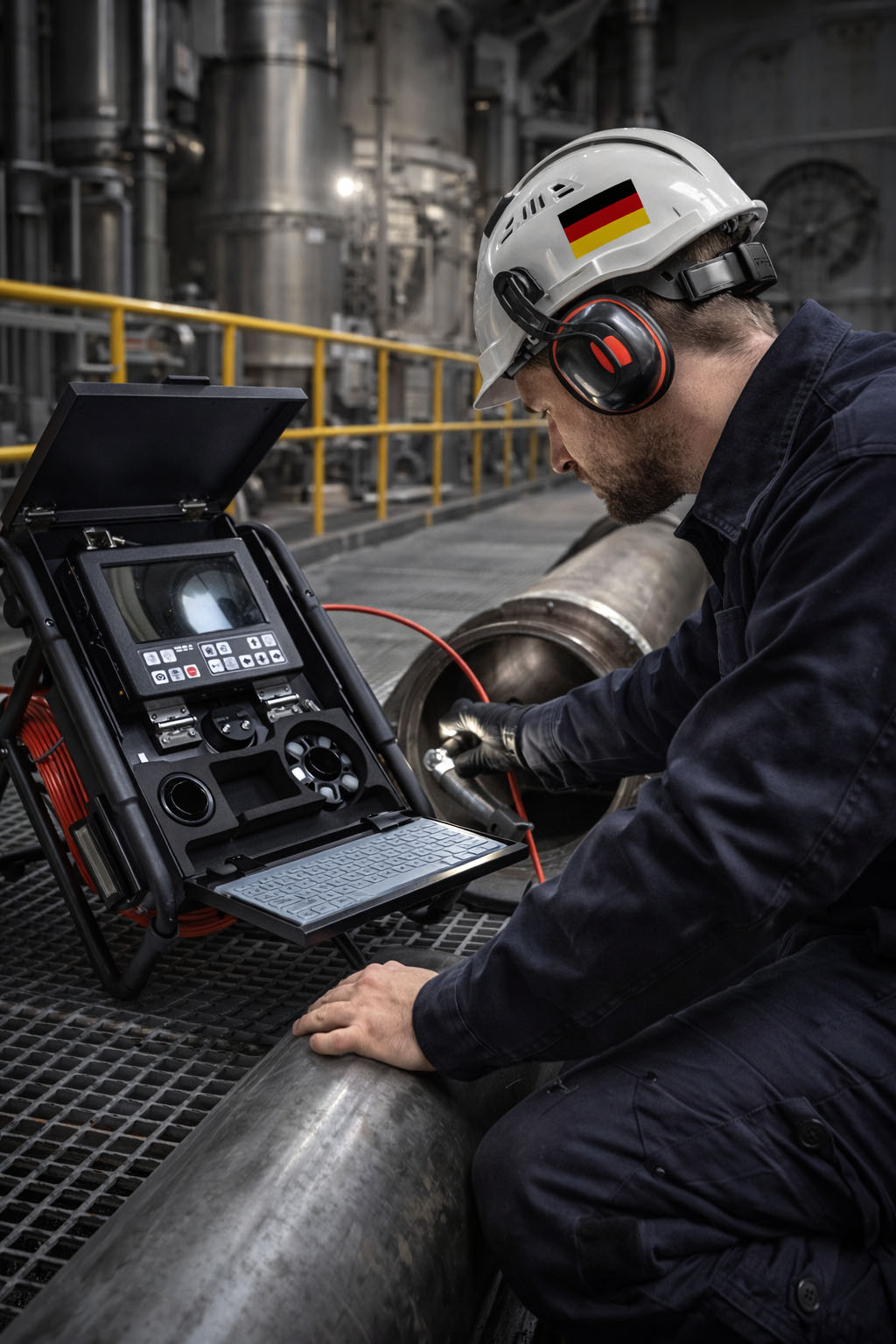
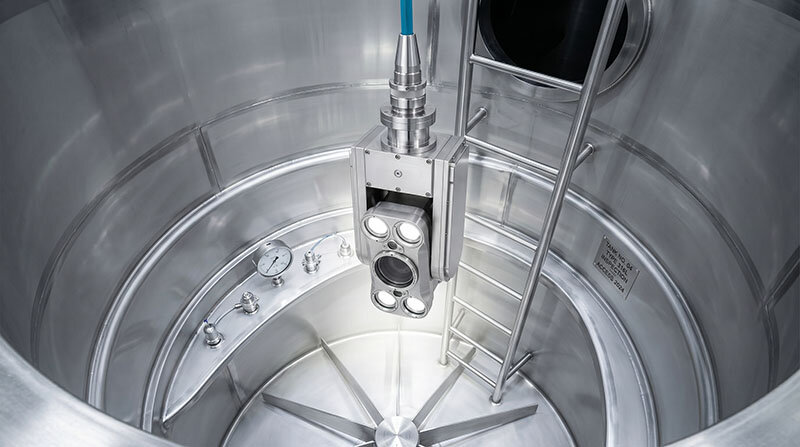
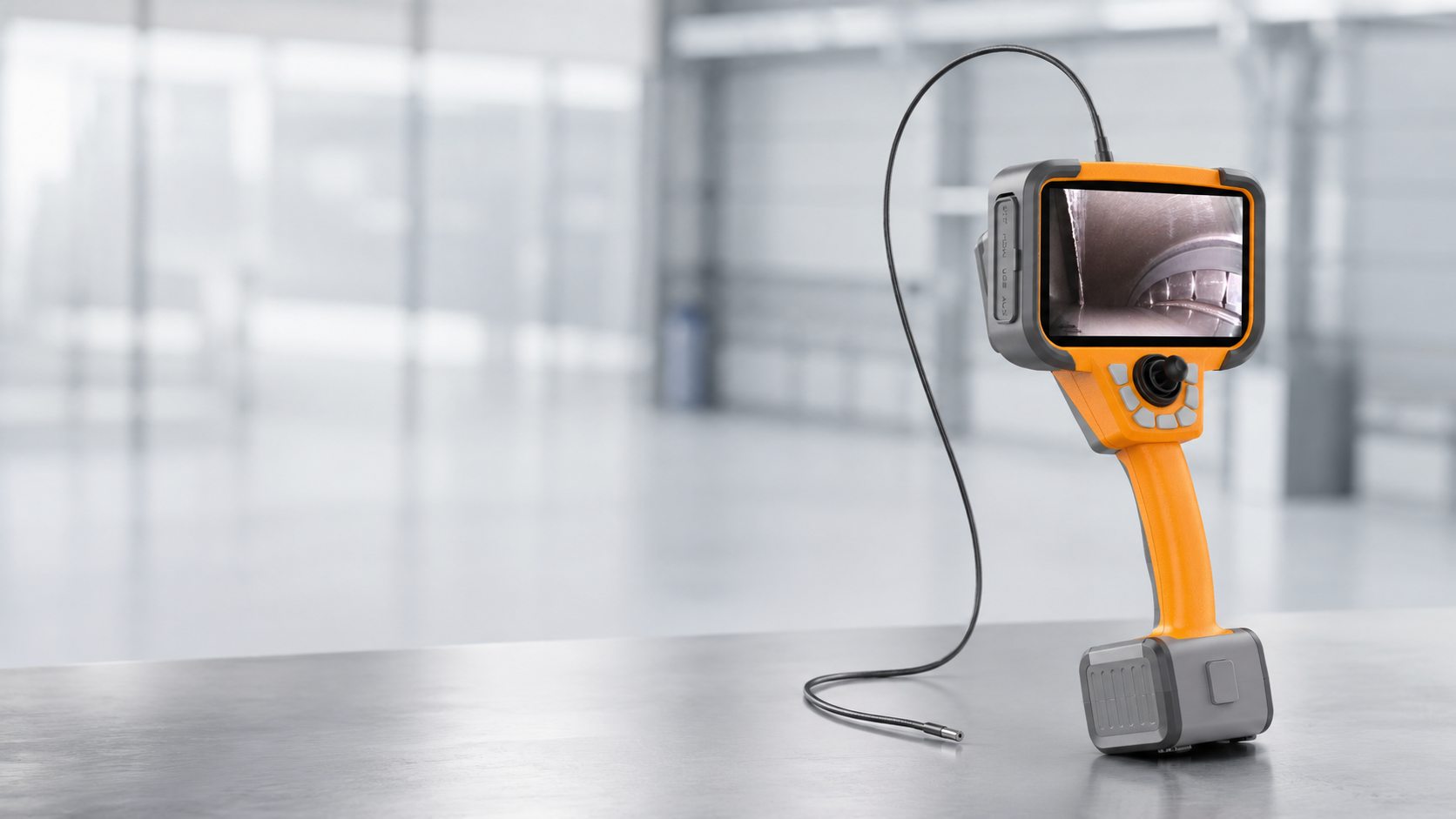
An industrial videoscope is a remote visual inspection device equipped with a miniature camera, illumination system, and flexible or rigid probe that allows inspectors to view internal areas without disassembly.
What is the difference between a videoscope and a borescope?
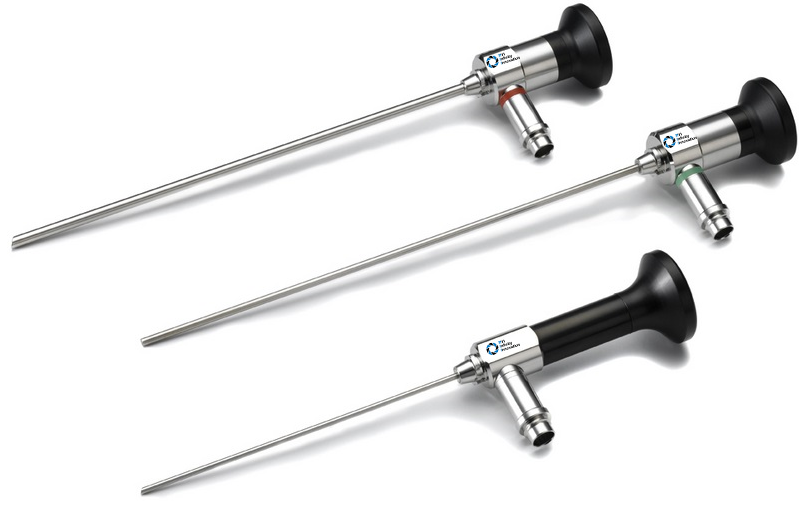
A videoscope uses a digital camera sensor at the probe tip to capture and display images electronically. A traditional borescope may use optical lens systems or fiber optics instead of digital imaging.
What does RVI mean?
RVI stands for Remote Visual Inspection. It refers to the inspection of internal or inaccessible areas using imaging tools such as videoscopes or borescopes.
Which industries use industrial videoscopes?
Common industries include aerospace, automotive, power generation, oil and gas, manufacturing, pipeline inspection, quality assurance, and industrial maintenance.
Probe Diameter Questions
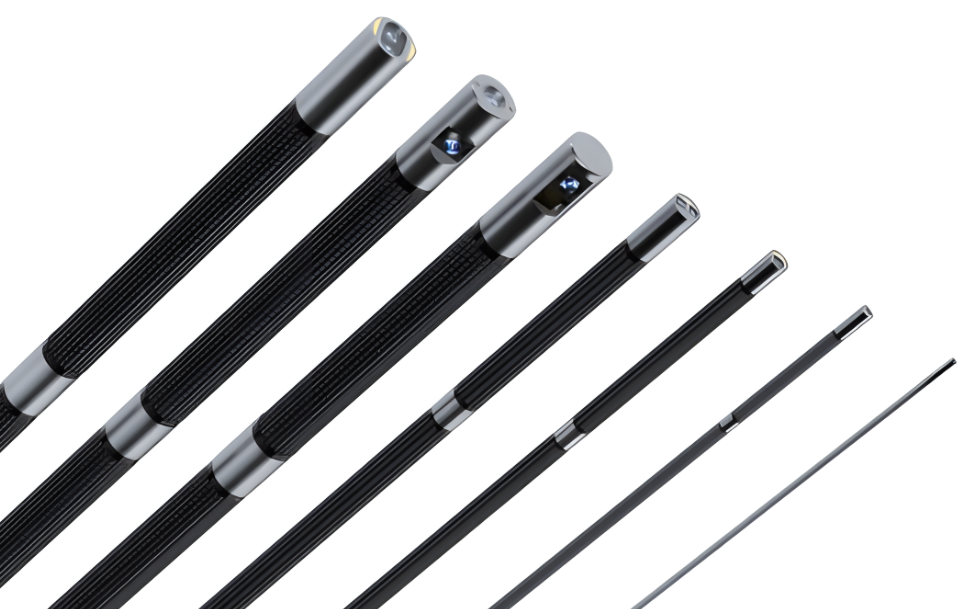
How do I choose the correct probe diameter?
The general rule is to choose the largest probe diameter that can safely access the inspection area. Larger probes usually provide better image quality, illumination, and durability.
What are ultra-thin videoscope probes used for?
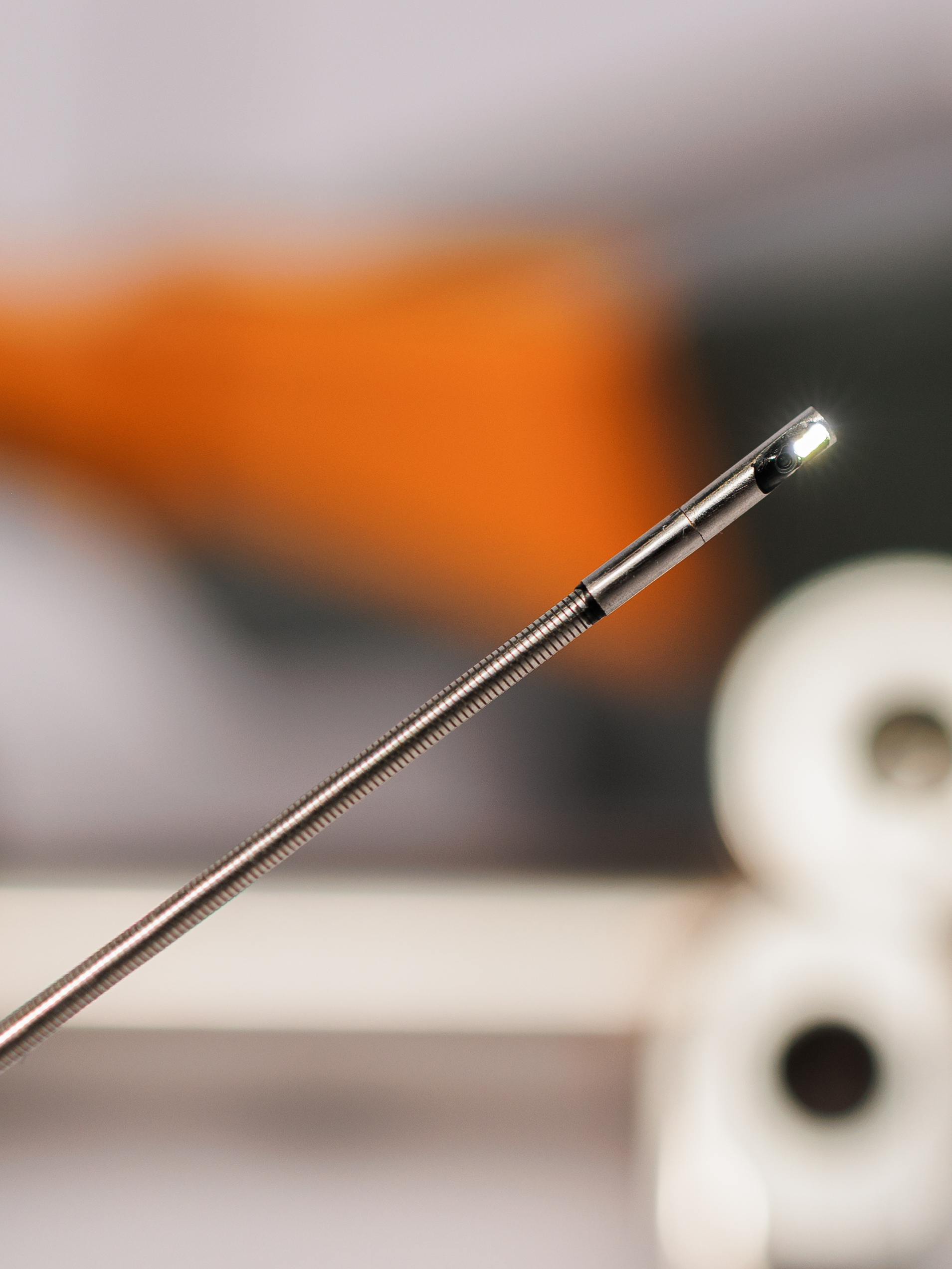
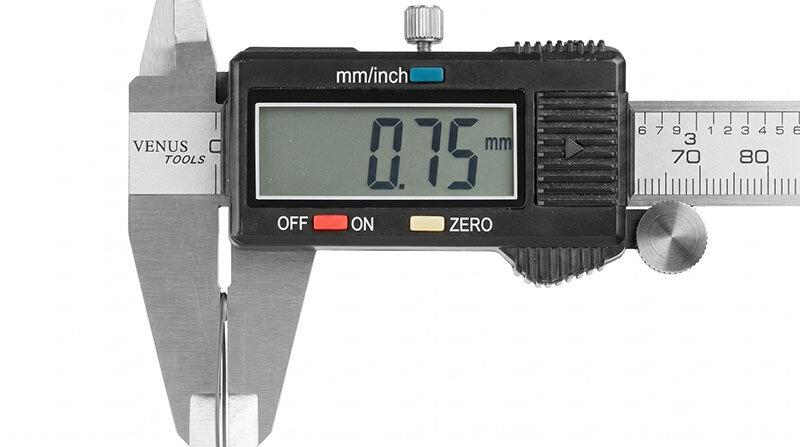
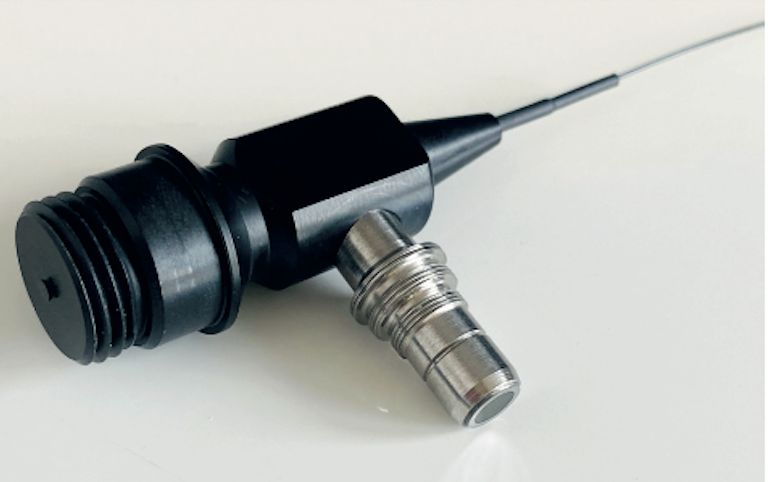
Ultra-thin probes such as 0.95 mm or 1.0 mm are used for extremely small access points including cooling holes, injectors, and micro mechanical inspection.
Are smaller probes always better?
No. Smaller probes provide better access capability but usually have lower durability, lower illumination performance, and higher repair costs.
What is the most common industrial probe diameter?
2.8 mm, 4 mm, and 6 mm probes are among the most commonly used industrial videoscope diameters.
Image Quality Questions
What resolution is typical for industrial videoscopes?
Ultra-thin probes commonly use resolutions such as 400 × 400 pixels, while larger probes such as 4 mm and 6 mm often support HD resolution like 1280 × 720.
Is HD resolution necessary for industrial inspection?
HD resolution improves defect visibility and image clarity, especially for turbine inspection and detailed defect analysis. However, access capability is often more important than resolution.
Why do ultra-thin probes usually have lower resolution?
The internal space inside ultra-thin probes is extremely limited, making integration of larger HD image sensors technically difficult.
Can videoscope images be recorded?
Yes. Most modern industrial videoscopes support image capture and video recording for inspection documentation and reporting.
Articulation Questions
What is articulation?
Articulation refers to the bending movement of the probe tip that allows navigation inside complex inspection paths.
What is the difference between 2-way and 4-way articulation?
2-way articulation typically bends up and down, while 4-way articulation bends in four directions: up, down, left, and right.
Why is 4-way articulation important?
4-way articulation provides better navigation flexibility and is especially useful for turbine inspection, engine inspection, and complex industrial geometries.
Do all videoscopes have articulation?
No. Some basic or ultra-thin probes may use non-articulating or limited articulation designs depending on application requirements.
Dual Camera Questions
What is a dual camera videoscope?
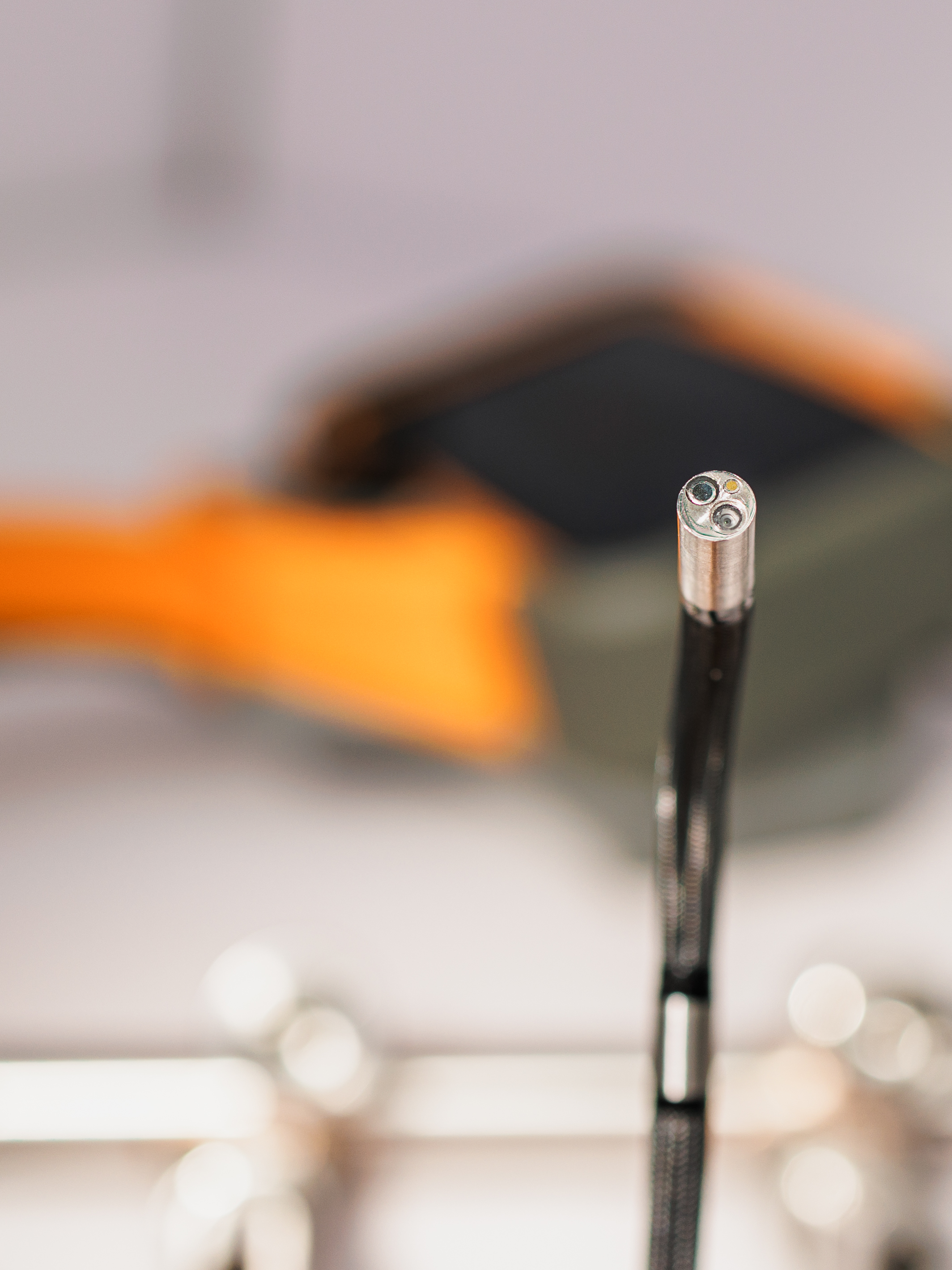
A dual camera videoscope integrates two separate cameras, usually a forward-view camera and a side-view camera, inside the probe tip.
What is the advantage of a dual camera system?
Dual camera systems allow users to switch viewing directions instantly without removing the probe, improving inspection efficiency.
Are dual camera probes more complex?
Yes. Dual camera systems require additional optics, sensors, and signal transmission components inside the probe tip.
Can dual camera systems replace side-view adapters?
In many industrial applications yes, although optical side-view adapters are still widely used in certain aerospace inspection procedures.
Application Questions
Can videoscopes inspect aircraft engines?
Yes. Videoscopes are widely used for aircraft engine inspection, turbine blade inspection, and combustion chamber inspection.
Can videoscopes inspect automotive engines?
Yes. Videoscopes are commonly used to inspect pistons, cylinders, valves, and combustion chambers without engine disassembly.
Can videoscopes be used for weld inspection?
Yes. Videoscopes are often used to inspect internal weld areas, pipe welds, and difficult-to-access weld joints.
Can videoscopes inspect heat exchangers?
Yes. Flexible videoscopes are commonly used for tube and heat exchanger inspection in industrial maintenance.
Durability and Repair Questions
Why are videoscope probes expensive to repair?
Industrial videoscope probes contain miniature cameras, articulation systems, signal wiring, illumination components, and protective structures inside very small diameters.
What are the most common causes of probe damage?
Common causes include excessive bending, crushing, sharp edge abrasion, over-twisting, and improper insertion techniques.
Are larger probes more durable?
Generally yes. Larger probes can support stronger internal structures and better mechanical protection.
How can probe lifetime be extended?
Proper handling, avoiding excessive bending, careful insertion, and correct storage significantly improve probe lifetime.
Portable Videoscope Questions
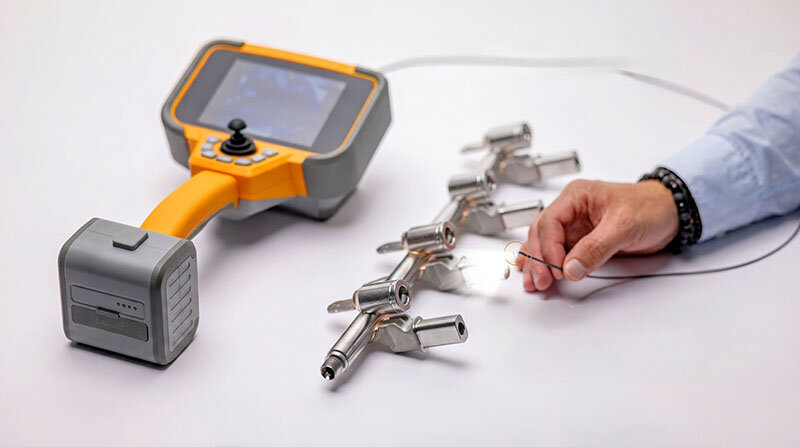
Why are portable videoscopes popular?
Portable videoscopes allow fast field inspection with minimal equipment disassembly and reduced downtime.
Do portable videoscopes support battery operation?
Yes. Most modern portable industrial videoscopes use rechargeable battery systems.
Can portable systems provide professional inspection quality?
Yes. Modern portable videoscopes commonly support HD imaging, advanced articulation, dual camera systems, and digital reporting features.
Are portable videoscopes suitable for industrial environments?
Yes. Industrial portable videoscopes are designed with rugged housings and reinforced probes for demanding inspection environments.
Maintenance and Service Questions
Do videoscopes require regular maintenance?
Yes. Regular cleaning, proper storage, and periodic inspection help maintain system performance and extend service life.
Can damaged probes be repaired?
Many probe damages can be repaired depending on the severity and affected components.
What affects videoscope repair cost?
Repair cost depends on probe diameter, articulation damage, camera damage, insertion tube condition, and overall internal component damage.
Is preventive handling important?
Yes. Proper operator training and handling practices are critical for reducing repair frequency and extending probe lifetime.
Conclusion
Industrial videoscopes have become essential inspection tools across many industries due to their ability to provide fast, non-destructive internal inspection.
Understanding probe selection, articulation systems, image quality, durability, and inspection workflows helps users maximize inspection efficiency and long-term equipment reliability.