Why AI Still Needs Experienced Inspectors in Industrial Borescope Inspection
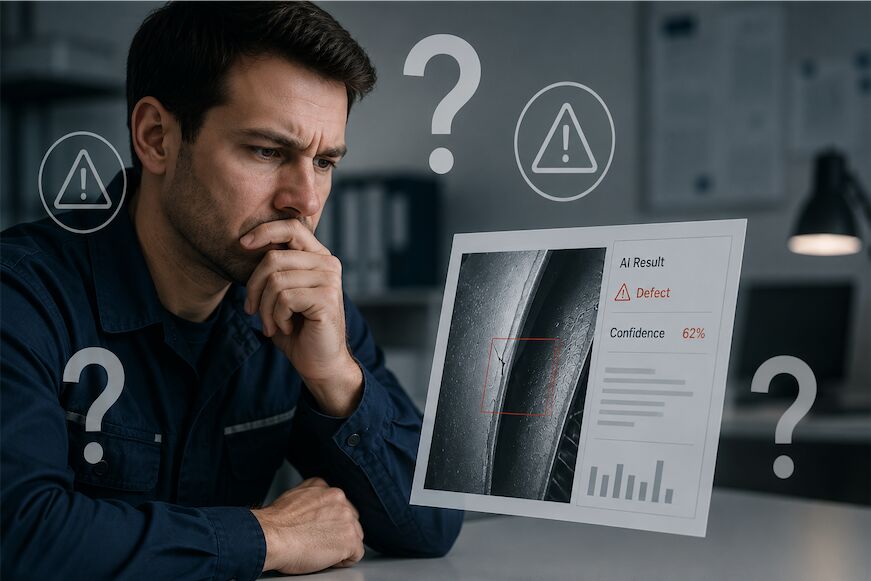
AI can support industrial borescope inspection, but experienced inspectors remain essential for final judgment, safety responsibility, defect interpretation, and reliable NDT decision-making.
Why AI Still Needs Experienced Inspectors in Industrial Borescope Inspection
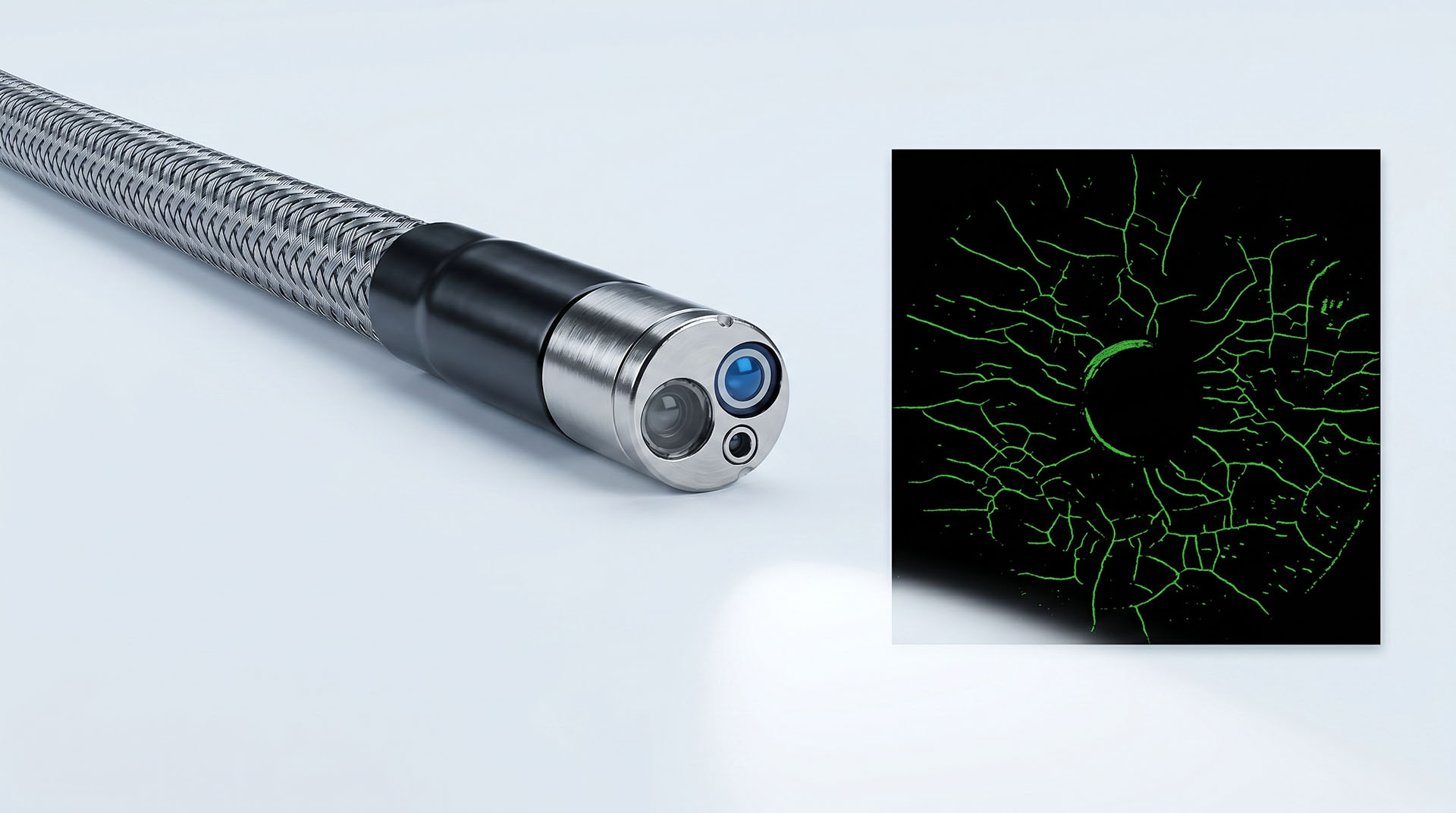
Artificial intelligence is becoming one of the most discussed topics in industrial inspection. Today, many videoscope and borescope manufacturers promote features such as AI defect recognition, automatic crack detection, predictive maintenance, smart reporting, and voice-assisted workflows.
These technologies are exciting, and they will continue to improve inspection efficiency in the future. However, in real industrial borescope inspection, the biggest challenge is often not only defect recognition itself. The real challenge is responsibility.
The Key Question: Who Takes Responsibility for a Wrong Judgment?
Industrial inspection is directly connected to safety, maintenance decisions, downtime risk, and equipment reliability. If AI misses a serious indication, the consequences can be significant.
For example, what happens if an AI-assisted inspection system fails to identify:
a turbine blade crack,
cooling hole damage,
coating delamination,
or FOD, also known as Foreign Object Damage?
If the missed defect later leads to engine shutdown, blade failure, unscheduled downtime, or even a major safety incident, one important question remains: who is responsible?
This is why, in today’s global industrial inspection industry, AI is still mainly used as an assistant, an indication tool, or a workflow aid. It is not used as the final decision maker.
AI-Assisted Inspection Is Not Inspector Replacement
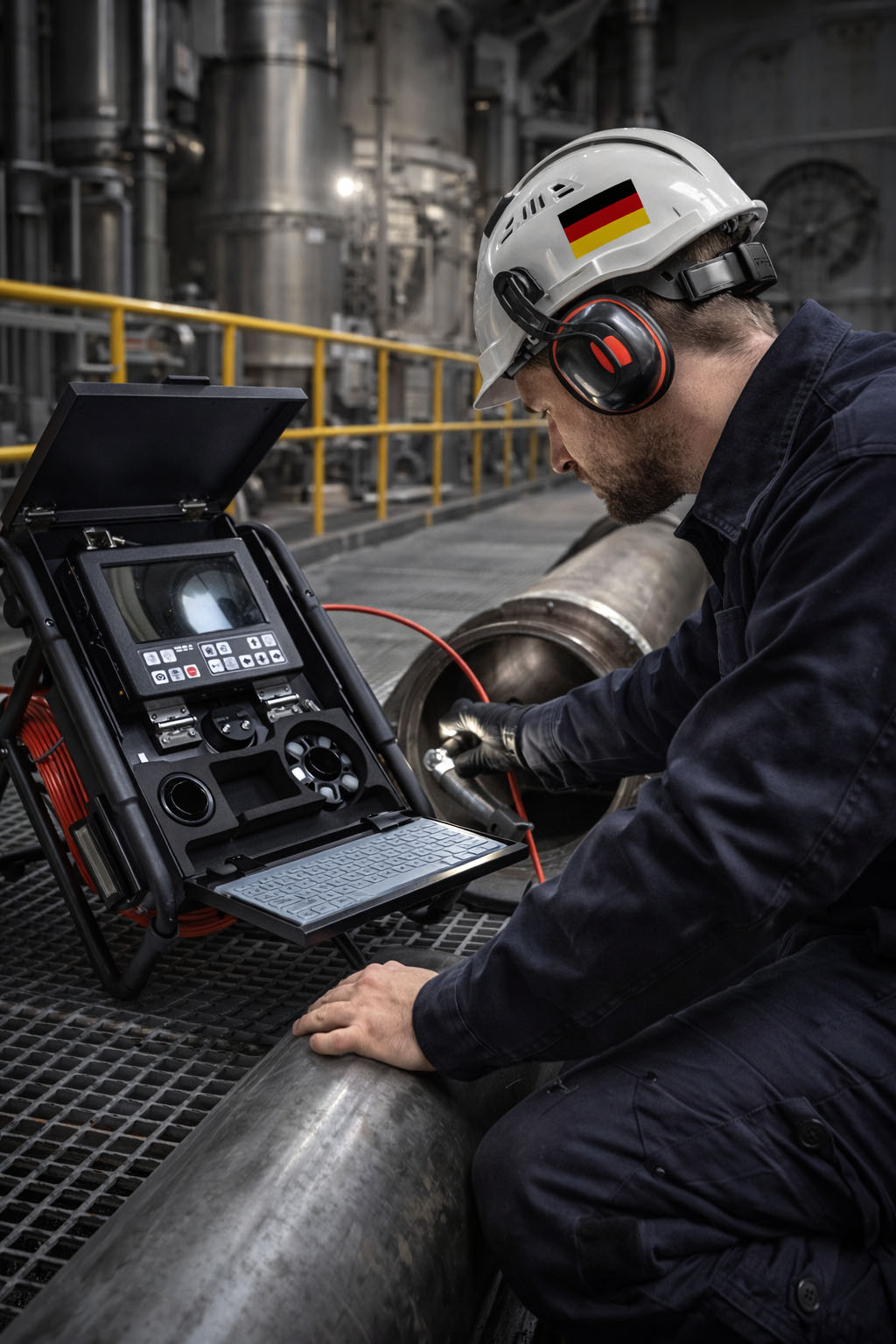
Even high-end inspection technology suppliers usually position their systems as AI-assisted inspection systems. They do not position them as replacements for certified inspectors.
The reason is simple: in real industrial environments, final inspection responsibility still belongs to qualified professionals, such as:
Level II inspectors,
Level III inspectors,
certified NDT professionals,
and experienced maintenance engineers.
AI may help highlight possible indications, organize inspection data, support reporting, or improve workflow efficiency. But the final decision still requires human experience, technical understanding, and professional responsibility.
Industrial AI Requires Much More Than Image Recognition
Another major challenge is training data. Industrial AI is fundamentally different from consumer AI. In consumer applications, large volumes of general images are often available. In industrial inspection, high-quality defect data is much harder to collect, verify, and label correctly.
Industrial inspection applications can involve many different defect types and environments, including:
turbine blade defects,
casting defects,
weld indications,
aerospace component damage,
heat exchanger corrosion,
surface wear, erosion, cracks, and coating damage.
Even within the same industry, defect patterns can vary significantly. For example, different turbine generations from the same OEM may show different blade geometries, coating systems, cooling hole designs, and damage characteristics.
Building truly reliable industrial AI therefore requires massive real inspection datasets, years of defect labeling, validation across different industries, and long-term field verification.
Why Industrial AI Progress Is More Cautious
AI development in industrial inspection is often slower and more cautious than marketing language may suggest. This is not because the technology has no value. It is because reliability matters more than marketing speed.
In industrial inspection, a false negative can be much more serious than a missed object in a consumer image. A wrong judgment may lead to unnecessary downtime, incorrect maintenance planning, equipment damage, or safety risks.
For this reason, AI must be carefully validated before it can be trusted in safety-critical inspection workflows.
The Practical Role of AI in Borescope Inspection
At RVI Infinity Innovation, we believe AI can become a valuable tool to support inspectors, simplify workflows, and improve efficiency.
AI can help with:
highlighting possible defect areas,
supporting image comparison,
organizing inspection files,
improving report consistency,
reducing repetitive documentation work,
and assisting inspectors during routine visual inspection tasks.
However, practical inspection experience, engineering judgment, and human responsibility remain irreplaceable.
Industrial inspection is ultimately not just about detecting defects. It is about making safe, responsible, and technically justified decisions.
FAQ
Can AI replace certified industrial inspectors?
No. In industrial borescope inspection, AI can support the inspector, but it does not replace certified NDT professionals. Final inspection decisions still require human responsibility, technical experience, and qualified judgment.
What is AI-assisted borescope inspection?
AI-assisted borescope inspection means that artificial intelligence is used to support the inspection process. It may help identify possible indications, organize data, support reporting, or improve workflow efficiency. However, the final evaluation must still be made by an experienced inspector.
Why is AI defect detection difficult in industrial inspection?
Industrial defects vary widely depending on material, component type, operating environment, manufacturing process, and inspection conditions. Reliable AI requires large amounts of validated defect data, accurate labeling, and long-term field verification.
Who is responsible if AI misses a defect?
In real industrial inspection workflows, responsibility normally remains with the qualified inspector, maintenance team, or certified NDT professional. This is why AI is usually positioned as a support tool rather than as the final decision maker.
What can AI realistically improve in videoscope inspection?
AI can improve efficiency by supporting defect indication, image organization, reporting workflows, file management, and inspection consistency. It is especially useful when used as an assistant to experienced inspectors.
Why do experienced inspectors remain important?
Experienced inspectors understand component history, inspection conditions, defect behavior, maintenance consequences, and safety requirements. This practical judgment cannot be replaced by software alone.