Tungsten vs Stainless Steel
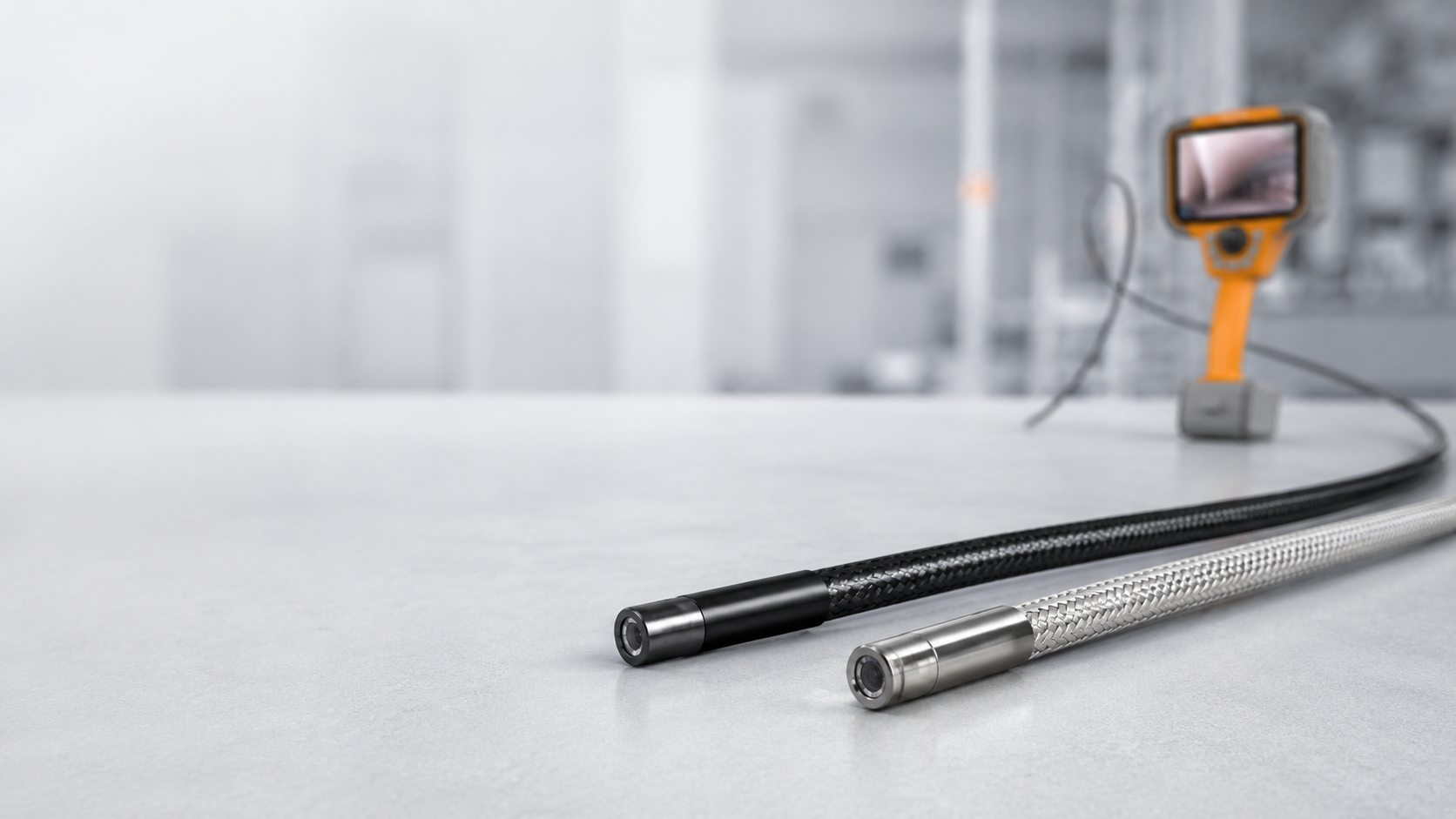
Learn the difference between tungsten and stainless steel videoscope probe materials, including wear resistance, flexibility, durability, surface protection, bending performance, and suitability for demanding industrial inspection environments.
Tungsten vs Stainless Steel Probe Protection in Industrial Videoscopes
Probe durability is one of the most important factors in industrial videoscope reliability. During inspection, probes are exposed to sharp edges, abrasion, bending stress, crushing forces, oil, and harsh industrial environments.
Two of the most common protective materials used in industrial videoscope probes are:
Tungsten braided protection
Stainless steel braided protection
Both materials provide important mechanical protection, but they offer different characteristics in terms of abrasion resistance, flexibility, durability, and cost.
Why Probe Protection Matters
The insertion tube of a videoscope probe is continuously exposed to:
Sharp metallic surfaces
Internal engine components
Casting edges
Pipe welds
High-friction insertion paths
Repeated bending movement
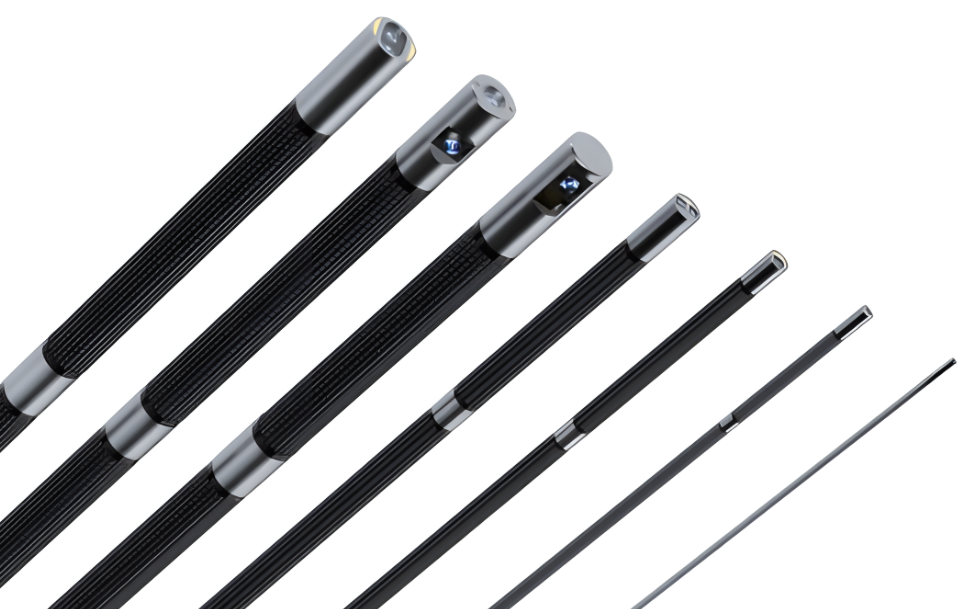
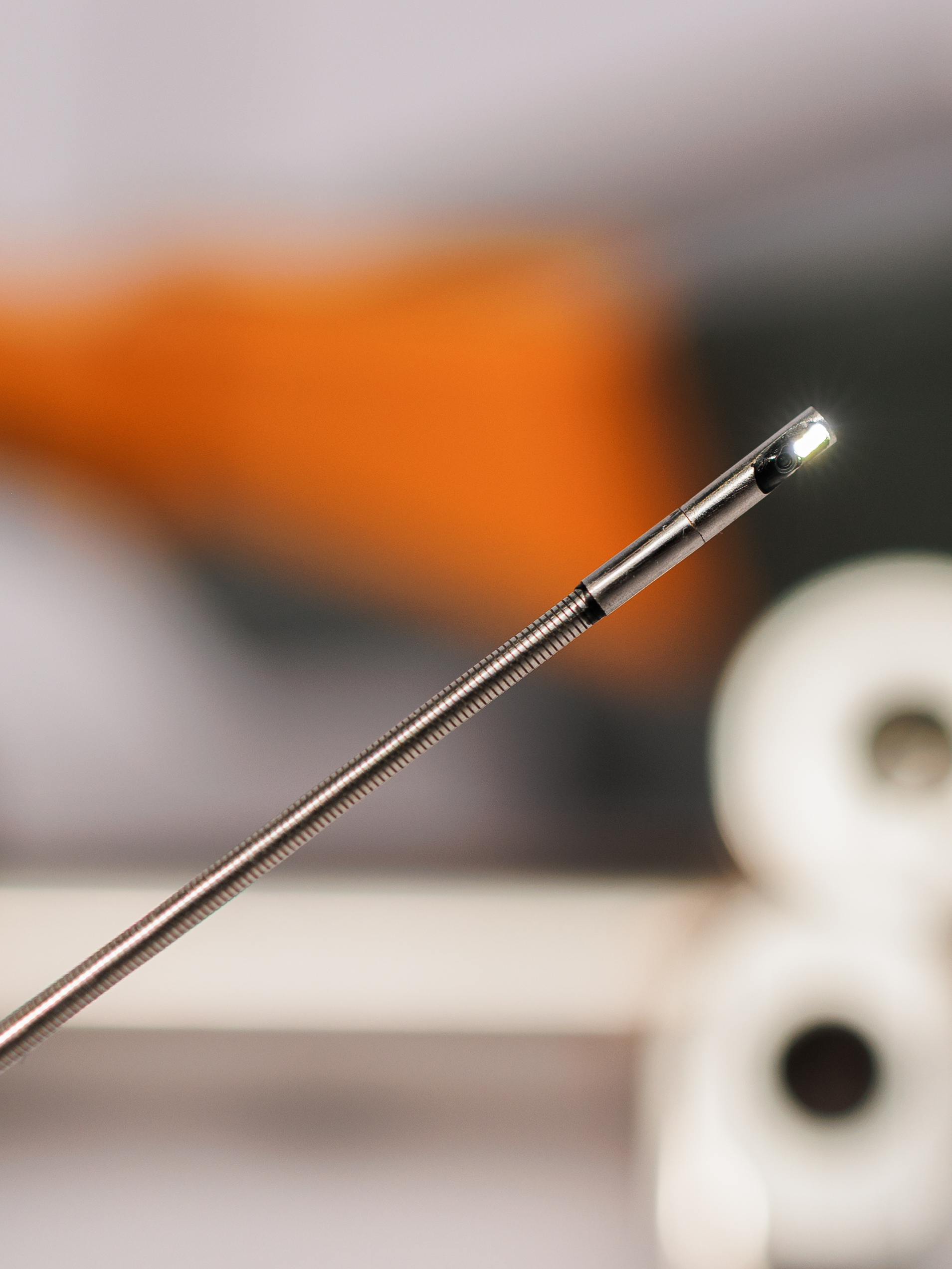
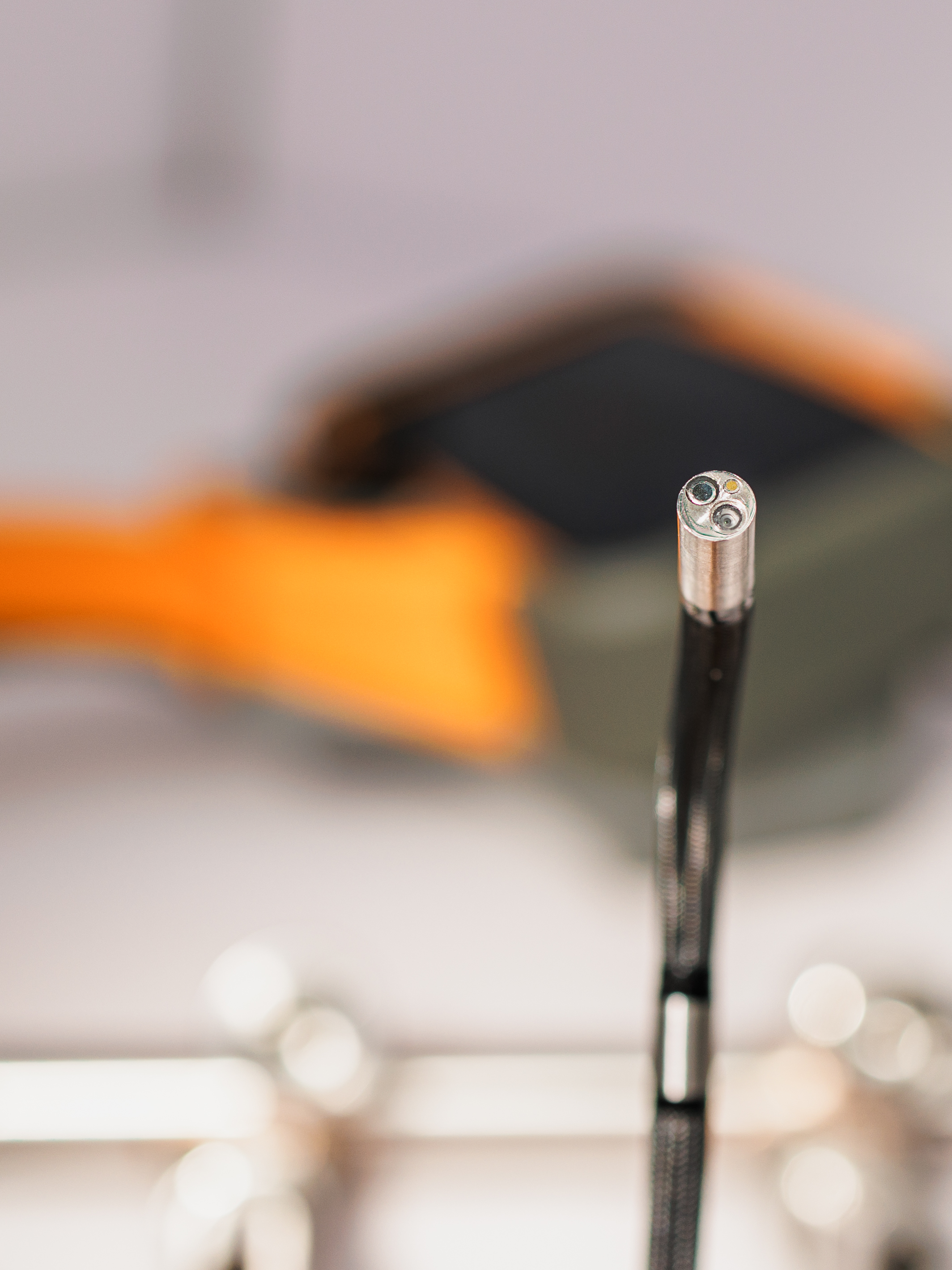
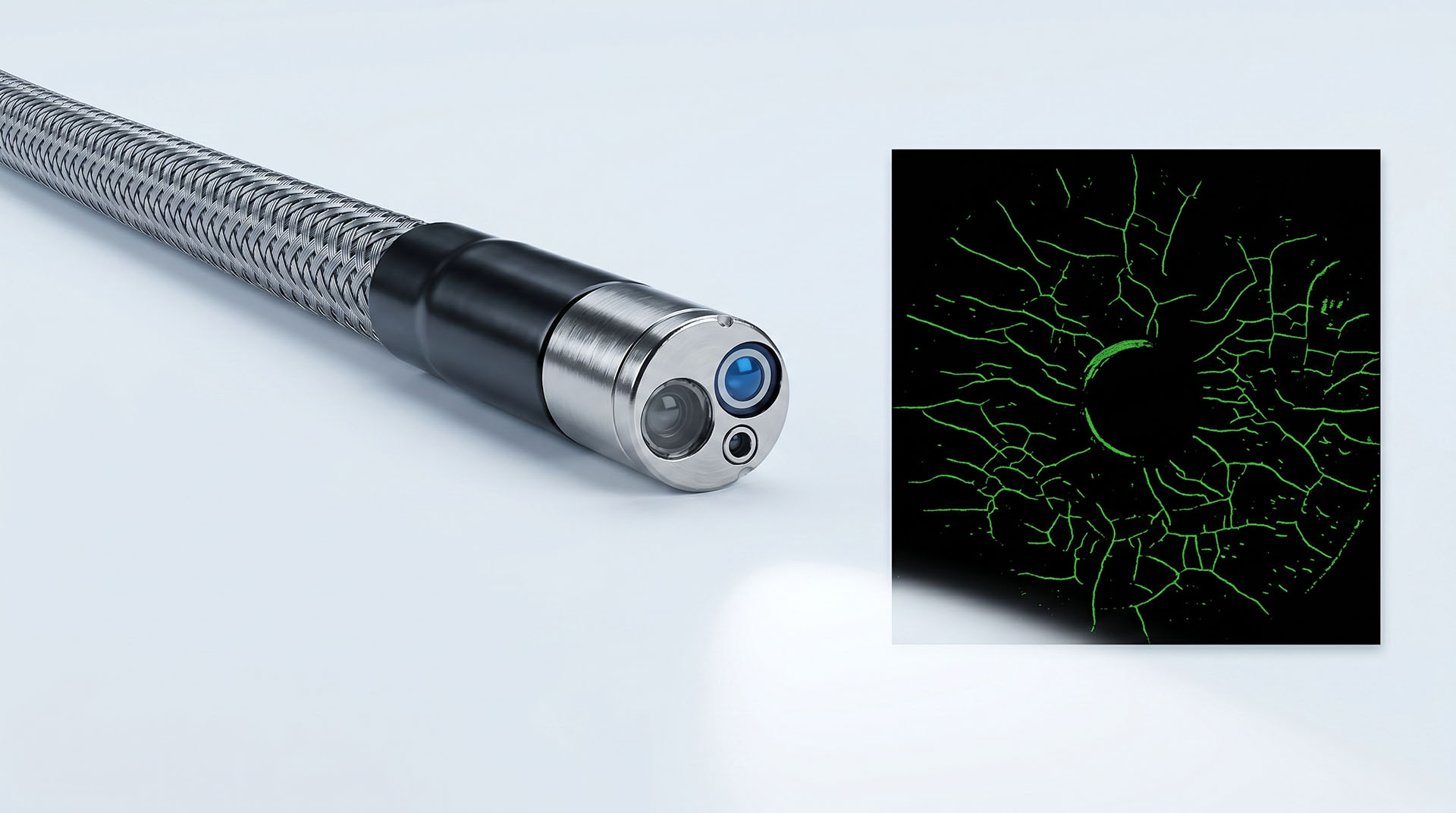
The outer protective braid plays a critical role in protecting the internal camera system, articulation mechanism, illumination wiring, and signal transmission components.
What is Stainless Steel Probe Protection?
Stainless steel braided protection uses fine stainless steel wire structures wrapped around the insertion tube to improve mechanical durability and abrasion resistance.
Stainless steel is widely used because it provides a strong balance between:
Durability
Flexibility
Cost efficiency
Industrial reliability
Advantages of Stainless Steel Protection
Good mechanical durability
Strong corrosion resistance
Good flexibility
Lower manufacturing cost
Suitable for general industrial inspection
Good balance between flexibility and protection
Limitations of Stainless Steel Protection
Lower abrasion resistance compared with tungsten
Can wear faster in extremely harsh environments
Less resistant to aggressive surface friction
Stainless steel protection is commonly used in:
General industrial maintenance
Automotive inspection
Quality assurance
Standard industrial videoscopes
What is Tungsten Probe Protection?
Tungsten braided protection uses tungsten alloy wire structures to provide extremely high abrasion resistance and mechanical durability.
Tungsten is significantly harder and more wear-resistant than stainless steel.
Advantages of Tungsten Protection
Excellent abrasion resistance
Superior wear protection
Long service life in harsh environments
Better resistance against sharp surfaces
Suitable for aggressive industrial inspection conditions
Limitations of Tungsten Protection
Higher manufacturing cost
Slightly reduced flexibility
Heavier structure
More expensive repair cost
Tungsten braided probes are commonly used in:
Turbine inspection
Aerospace maintenance
Power generation
Heavy industrial inspection
Harsh inspection environments
Comparison Between Tungsten and Stainless Steel
| Feature | Stainless Steel | Tungsten |
|---|---|---|
| Abrasion Resistance | Good | Excellent |
| Mechanical Durability | Good | Very high |
| Flexibility | Better | Slightly reduced |
| Weight | Lighter | Heavier |
| Cost | Lower | Higher |
| Harsh Environment Suitability | Good | Excellent |
| Typical Applications | General industrial use | Turbines and heavy industry |
Why Tungsten is Popular in High-End Industrial Videoscopes
Turbine inspection, aerospace maintenance, and heavy industrial inspection often expose probes to:
Sharp blade edges
High friction insertion paths
Long inspection cycles
Aggressive mechanical wear
Tungsten braided protection significantly improves probe lifetime in these demanding environments.
This is why many high-end industrial videoscope systems use tungsten outer braid protection.
Why Stainless Steel is Still Widely Used
Stainless steel remains highly practical because it offers:
Good industrial durability
Better flexibility
Lower cost
Sufficient protection for many applications
For standard industrial inspection environments, stainless steel protection often provides an excellent balance between cost and performance.
Flexibility Considerations
Probe flexibility is critical for:
Navigation through bends
Articulation responsiveness
Insertion control
Complex geometry inspection
Because tungsten braid structures are generally stiffer, stainless steel probes may provide slightly smoother flexibility in some applications.
Probe Lifetime Considerations
Probe lifetime depends on:
Inspection environment
Operator handling
Probe diameter
Insertion technique
Mechanical stress exposure
Even tungsten-protected probes can be damaged by:
Excessive bending
Crushing force
Improper handling
Over-articulation
Proper operator handling remains critical regardless of braid material.
Practical Industry Selection
Choose Stainless Steel Protection When:
General industrial inspection is performed
Cost efficiency is important
Higher flexibility is preferred
The environment is moderately demanding
Choose Tungsten Protection When:
Maximum abrasion resistance is required
The inspection environment is harsh
Turbine or aerospace inspection is performed
Long-term durability is critical
Conclusion
Both tungsten and stainless steel braided protection offer important advantages for industrial videoscope probes.
Stainless steel provides a strong balance between flexibility, durability, and cost efficiency, while tungsten offers superior abrasion resistance and long-term protection in harsh industrial environments.
The ideal solution depends on the inspection environment, operating conditions, and durability requirements.
FAQ
What is the main advantage of tungsten braid protection?
The main advantage is superior abrasion resistance and durability in harsh industrial inspection environments.
Why is stainless steel still widely used?
Stainless steel provides good durability, flexibility, corrosion resistance, and lower manufacturing cost for general industrial applications.
Is tungsten stronger than stainless steel?
Tungsten is significantly harder and more wear-resistant than stainless steel, making it better suited for high-abrasion environments.
Does tungsten protection reduce probe flexibility?
Generally yes. Tungsten braid structures are usually slightly stiffer than stainless steel braids.
Which protection type is better for turbine inspection?
Tungsten braided probes are commonly preferred for turbine inspection because of their superior abrasion resistance.
Are tungsten probes more expensive?
Yes. Tungsten braid materials and manufacturing processes are generally more expensive than stainless steel alternatives.
Can stainless steel probes survive industrial environments?
Yes. Stainless steel probes are widely used in industrial maintenance and provide excellent performance for many standard inspection applications.
Does braid material prevent all probe damage?
No. Even highly durable braid materials cannot fully protect against excessive bending, crushing, improper handling, or severe mechanical abuse.