Probe Material Explained
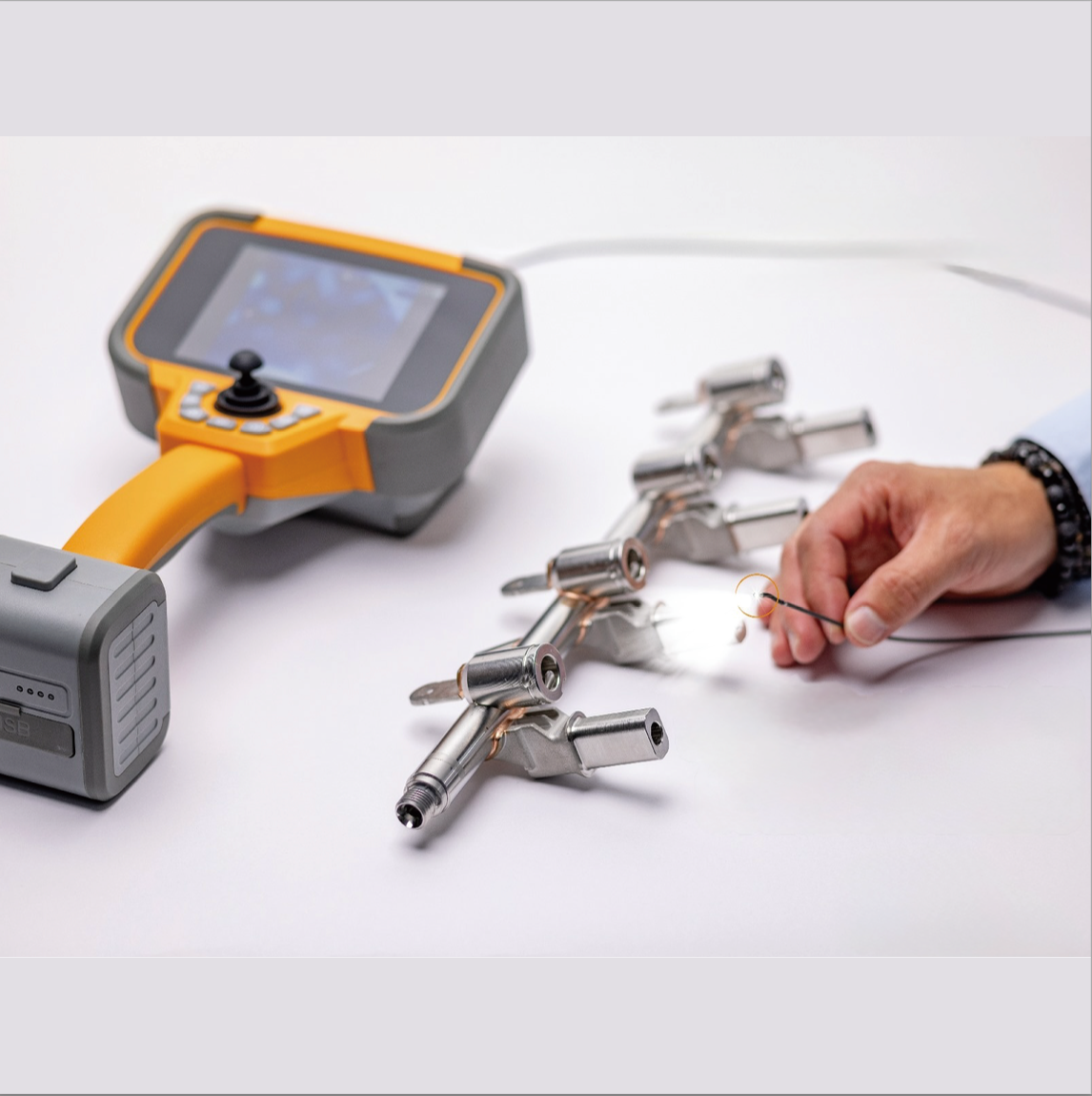
Learn how videoscope probe materials affect flexibility, durability, wear resistance, chemical resistance, bending performance, and service life in industrial remote visual inspection applications.
Probe Material Explained in Industrial Videoscopes
The probe is one of the most critical components of an industrial videoscope system. While image quality and articulation often receive the most attention, probe material selection directly affects durability, flexibility, chemical resistance, insertion performance, and repair cost.
Different inspection environments require different probe material characteristics. Understanding probe material construction helps users select the most suitable videoscope system for long-term industrial use.
Why Probe Material Matters
The videoscope probe operates inside harsh industrial environments where it may encounter:
Sharp metal edges
High temperatures
Oil and chemicals
Tight bending conditions
Mechanical abrasion
Repeated insertion cycles
The probe material determines how well the system can survive these operating conditions.
Main Components of a Videoscope Probe
A modern industrial videoscope probe typically contains:
Outer protective sheath
Articulation mechanism
Internal signal wiring
Camera module
Illumination system
Insertion tube reinforcement structure
The outer sheath material is especially important because it directly contacts the inspection environment.
Common Probe Materials
Stainless Steel Braided Sheath
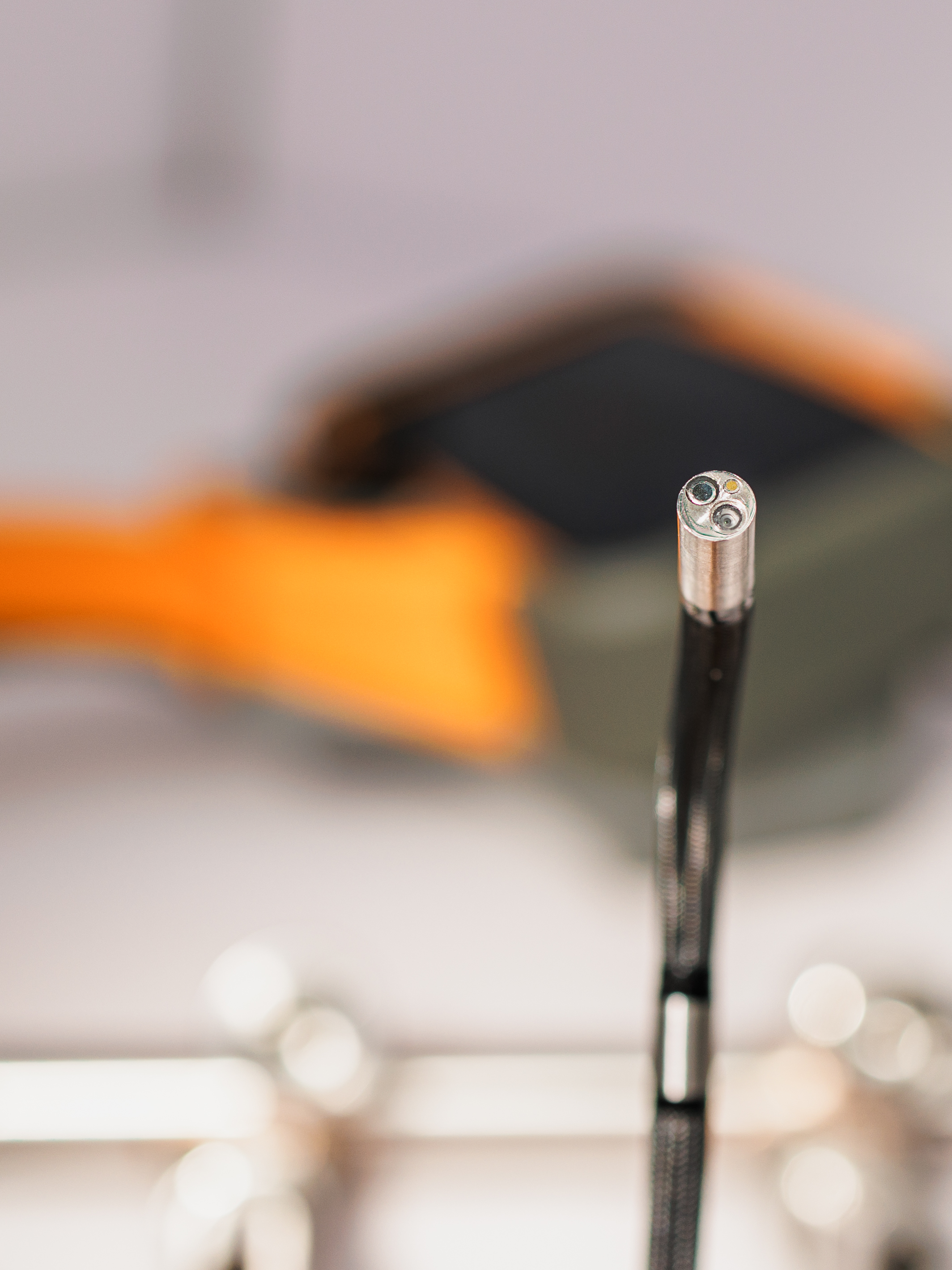
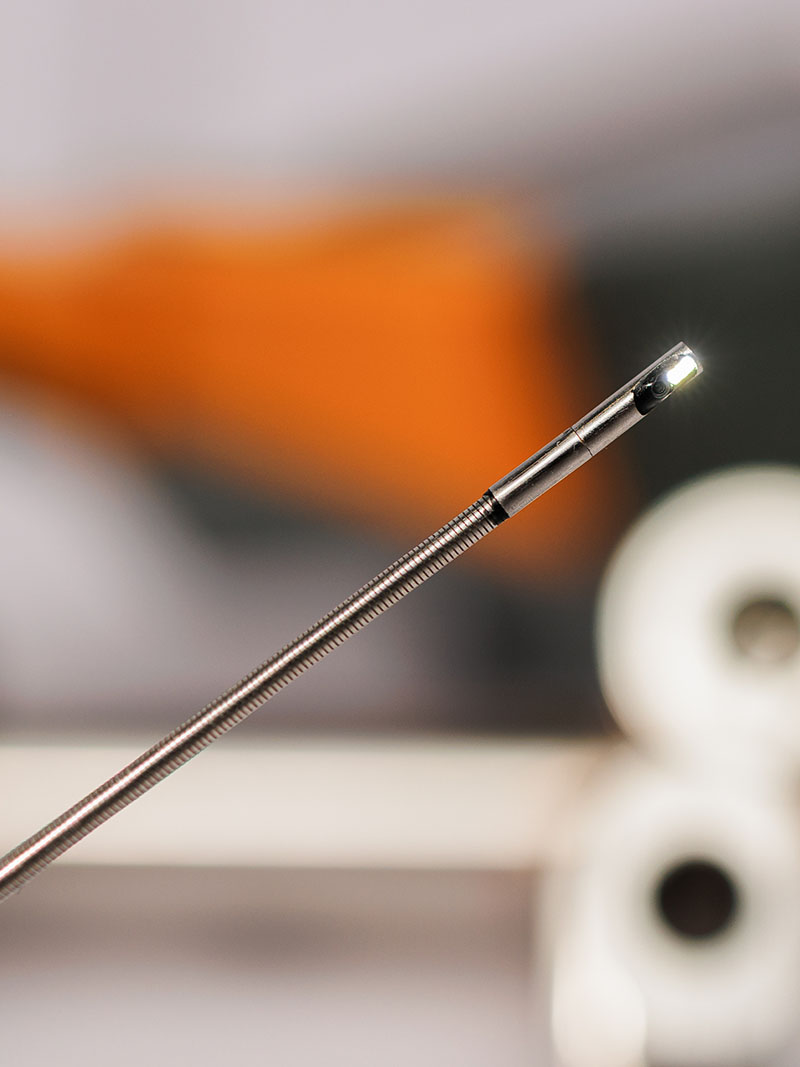
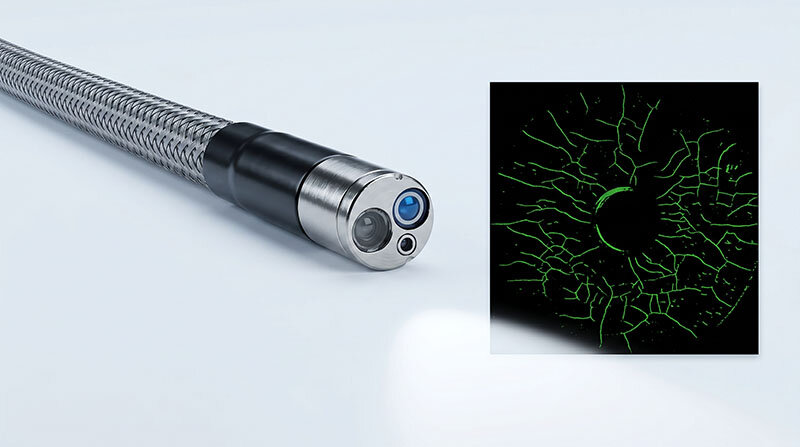
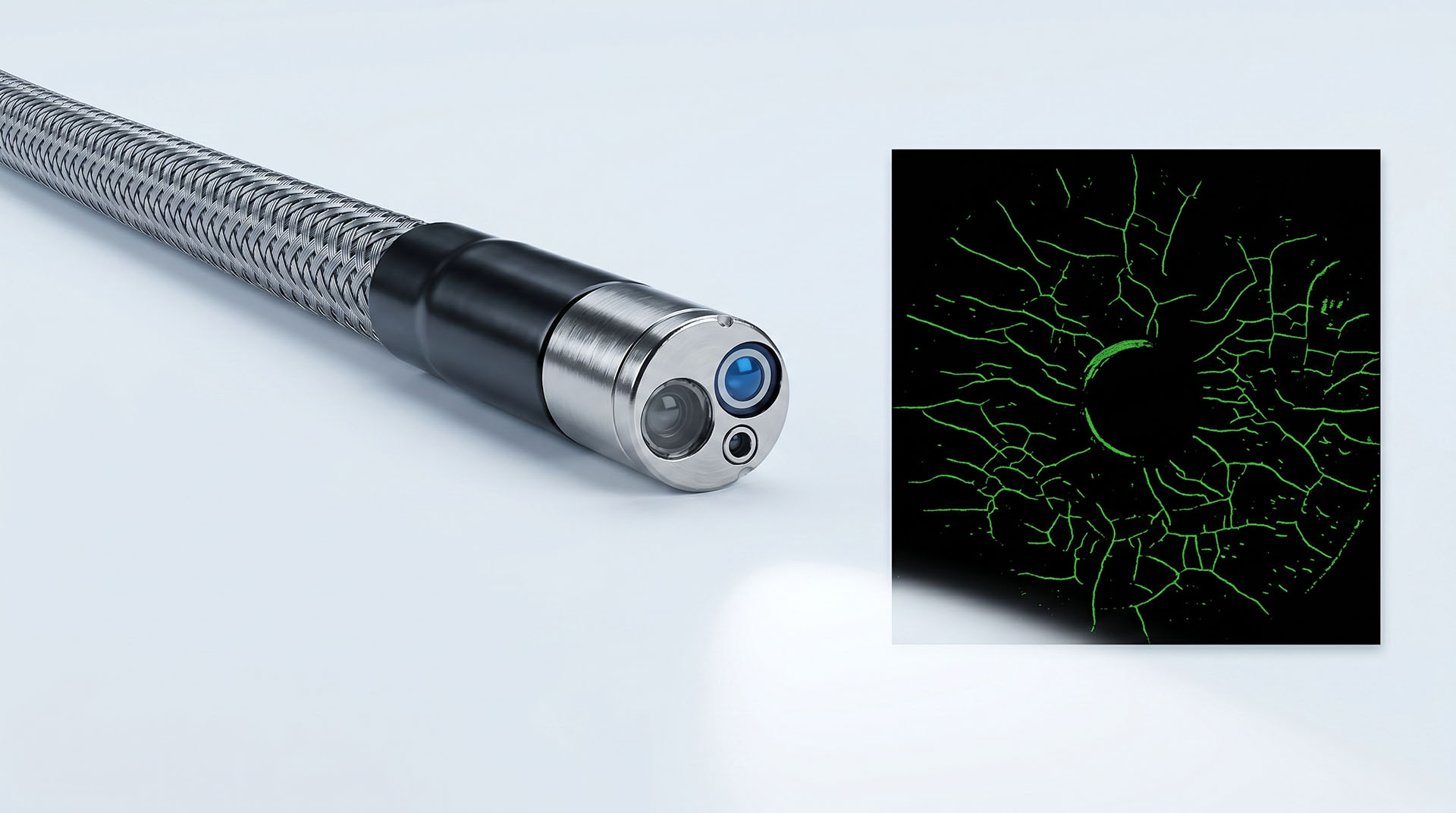
Stainless steel braided probes are widely used in industrial videoscopes because they provide strong mechanical protection and abrasion resistance.
Advantages
Excellent mechanical durability
Strong abrasion resistance
Good crush resistance
Suitable for harsh industrial environments
Long service life
Limitations
Slightly reduced flexibility
Higher bending resistance
Heavier structure
Stainless steel braided probes are commonly used in:
Turbine inspection
Automotive maintenance
Power generation inspection
General industrial maintenance
Polyimide (PI) Outer Sheath
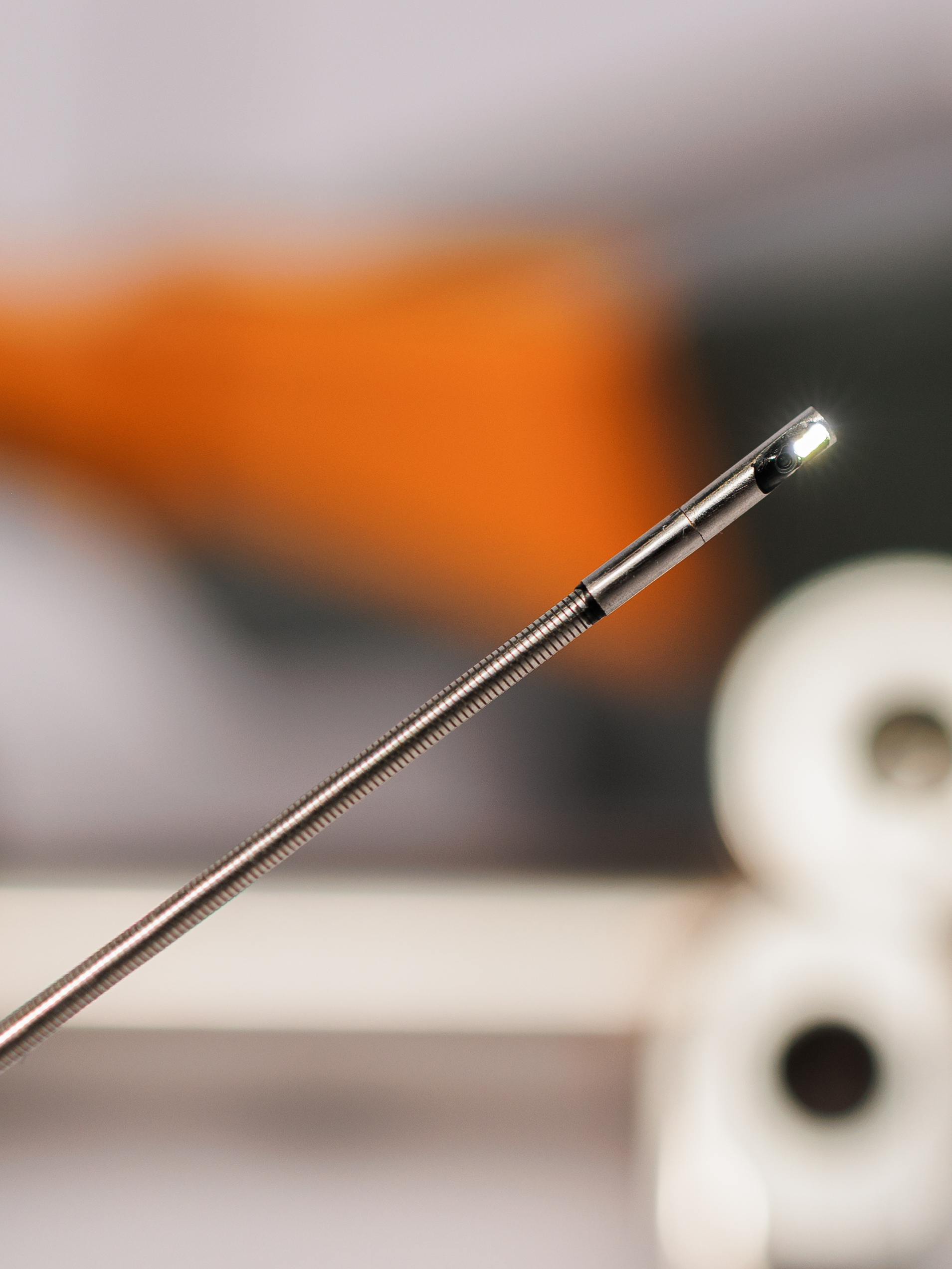
Polyimide, often abbreviated as PI, is a lightweight high-performance polymer material commonly used in ultra-thin videoscope probes.
PI materials provide excellent flexibility while maintaining compact probe construction.
Advantages
Excellent flexibility
Suitable for ultra-thin probe diameters
Lightweight construction
Good heat resistance
Smooth insertion performance
Limitations
Lower mechanical protection compared with stainless steel
More sensitive to crushing damage
Less suitable for rough industrial handling
PI outer sheaths are commonly used in:
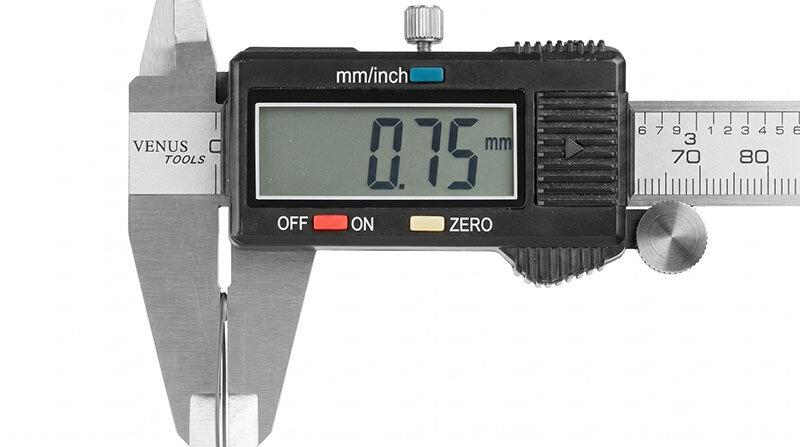
0.95 mm probes
1.0 mm probes
Ultra-thin inspection systems
Precision industrial inspection
Tungsten Braided Outer Layer
Some industrial videoscopes use tungsten braided protection for enhanced abrasion resistance.
Tungsten is highly resistant to wear and mechanical abrasion, making it suitable for demanding industrial environments.
Advantages
Excellent wear resistance
High durability
Good protection against sharp surfaces
Suitable for heavy industrial use
Limitations
Higher manufacturing cost
Slightly reduced flexibility
Heavier probe structure
Flexible vs Rigid Probe Material Design
Flexible videoscope probes require a balance between:
Flexibility
Durability
Bending capability
Mechanical protection
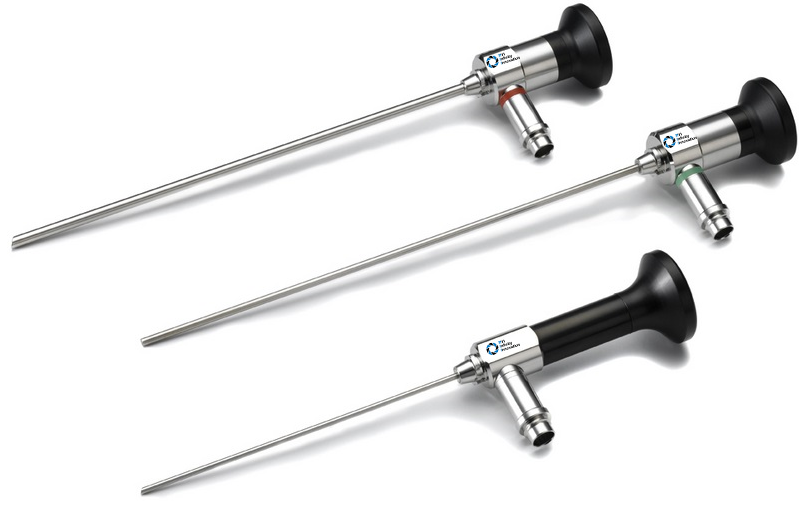
Rigid borescopes, in contrast, prioritize:
Structural stability
Optical alignment
Maximum durability
This is why flexible videoscope probes often use multi-layer material structures combining metal reinforcement and polymer protection.
How Probe Diameter Affects Material Selection
As probe diameter becomes smaller, material selection becomes increasingly critical.
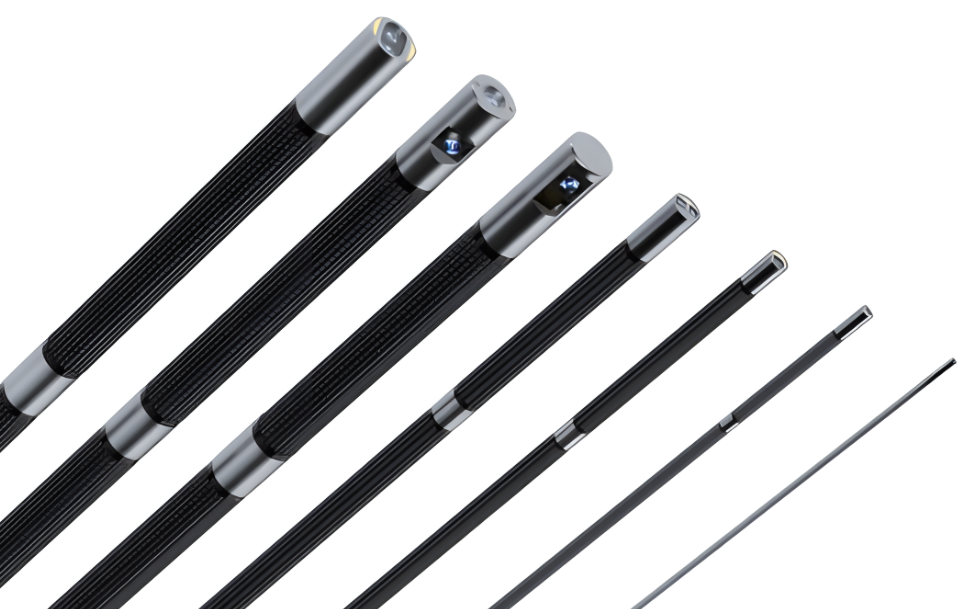
Ultra-thin probes below 1 mm require:
Highly flexible materials
Compact reinforcement structures
Lightweight outer sheaths
Larger probes such as 4 mm and 6 mm can support:
Stronger metal reinforcement
More durable braided structures
Improved crush resistance
Chemical Resistance Considerations
Industrial probes may contact:
Oil
Fuel
Solvents
Cleaning chemicals
Moisture
Probe materials must provide adequate chemical resistance to prevent outer sheath degradation and internal damage.
Different materials offer different levels of resistance depending on the industrial environment.
Temperature Resistance
Inspection environments such as turbines and engines may involve elevated temperatures.
Probe material selection affects:
Heat resistance
Mechanical stability
Long-term reliability
High-temperature inspection often requires specialized probe materials and sensor protection systems.
Common Causes of Probe Damage
Regardless of material selection, common probe damage causes include:
Excessive bending
Crushing force
Sharp edge abrasion
Improper insertion technique
Over-twisting
Chemical exposure
Proper handling remains essential for maximizing probe lifetime.
Practical Industry Selection
In many industrial applications:
Ultra-thin probes prioritize flexibility and access capability
Larger probes prioritize durability and mechanical protection
The ideal probe material depends on the inspection environment and operational priorities.
Conclusion
Probe material plays a major role in the performance, durability, and operational reliability of industrial videoscopes.
Stainless steel, polyimide, and tungsten-based structures each offer different advantages depending on the inspection application.
Understanding probe material construction helps users select the most suitable videoscope system for long-term industrial inspection success.
FAQ
Why is probe material important in a videoscope?
Probe material affects durability, flexibility, abrasion resistance, chemical resistance, and overall service life.
What is the advantage of stainless steel braided probes?
Stainless steel braided probes provide excellent mechanical durability and abrasion resistance for harsh industrial environments.
Why are ultra-thin probes often made with PI outer sheaths?
Polyimide materials provide excellent flexibility and compact construction, which are critical for ultra-thin probe diameters.
What is tungsten braid used for?
Tungsten braid is used to improve abrasion resistance and durability in demanding industrial inspection environments.
Are flexible probes less durable than rigid borescopes?
Generally yes. Flexible probes contain more complex internal structures and are more sensitive to bending and mechanical damage.
Can probe materials resist chemicals and oil?
Yes. Industrial videoscope probes are designed with materials that provide resistance to oil, fuel, solvents, and industrial contaminants.
What causes most probe failures?
Common causes include excessive bending, crushing, sharp edge damage, improper handling, and over-twisting during insertion.
How does probe diameter affect material design?
Smaller probes require lightweight and highly flexible materials, while larger probes can use stronger reinforcement structures for improved durability.