Dual Camera vs Single Camera
Learn the difference between dual camera and single camera videoscopes, including viewing direction, inspection efficiency, probe diameter, image quality, durability, and how to choose the right camera configuration for industrial inspection.
Dual Camera vs Single Camera Videoscope Systems
Industrial videoscopes are commonly available in two main imaging configurations:
Single camera systems
Dual camera systems
Both configurations are widely used in industrial visual inspection, but they offer different advantages depending on the inspection workflow, access geometry, and operational requirements.
Understanding the differences between these systems helps users select the most suitable solution for their inspection tasks.
What is a Single Camera Videoscope?
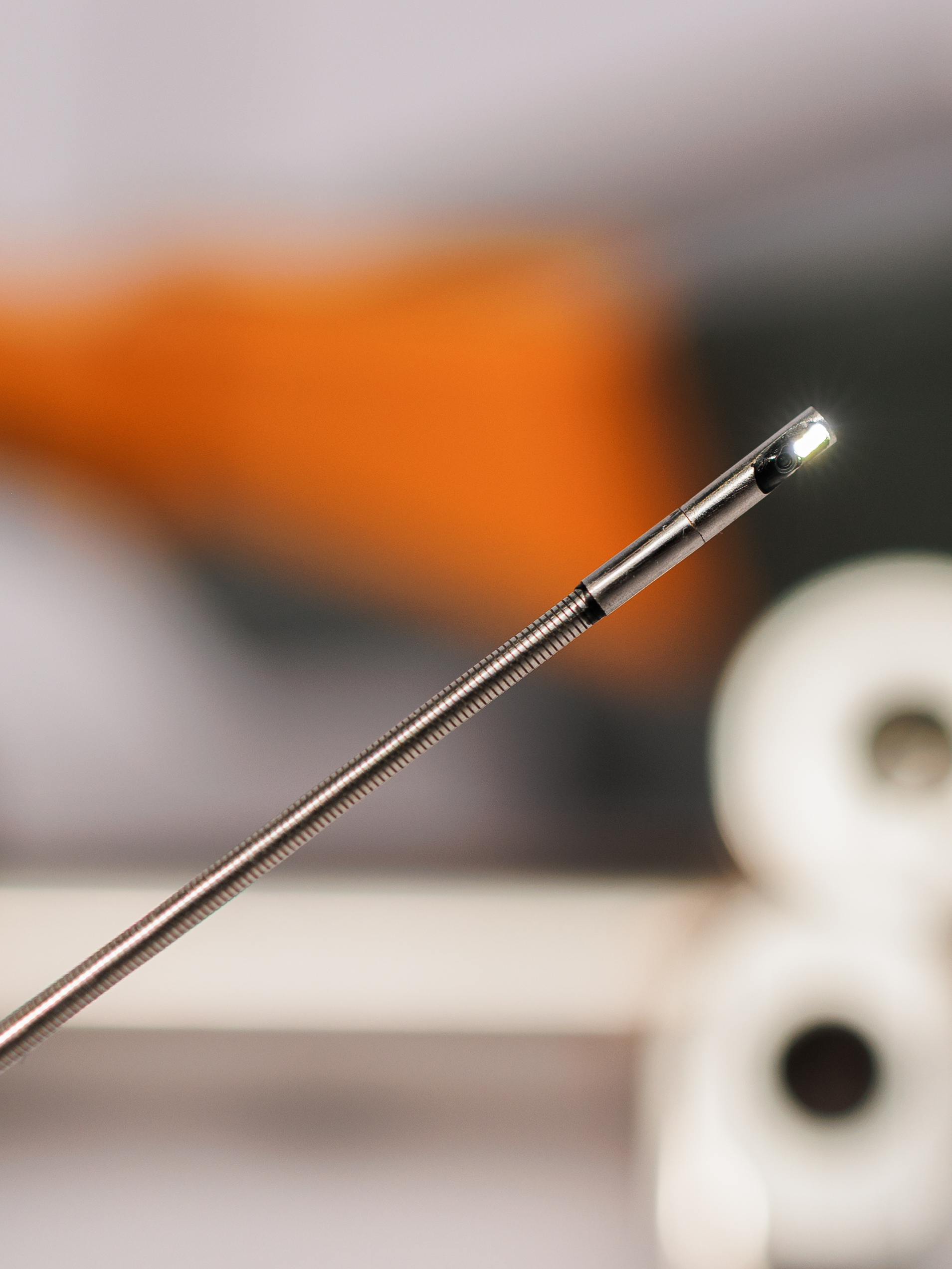
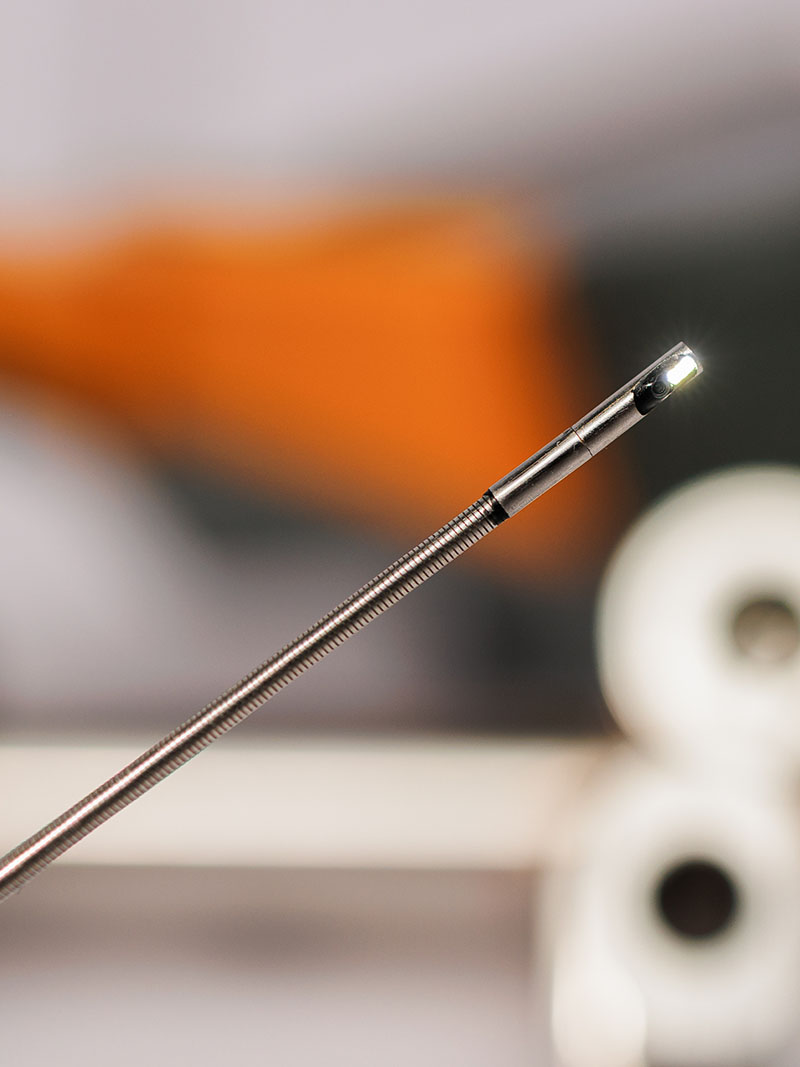
A single camera videoscope uses one camera module located at the probe tip.
The viewing direction is typically:
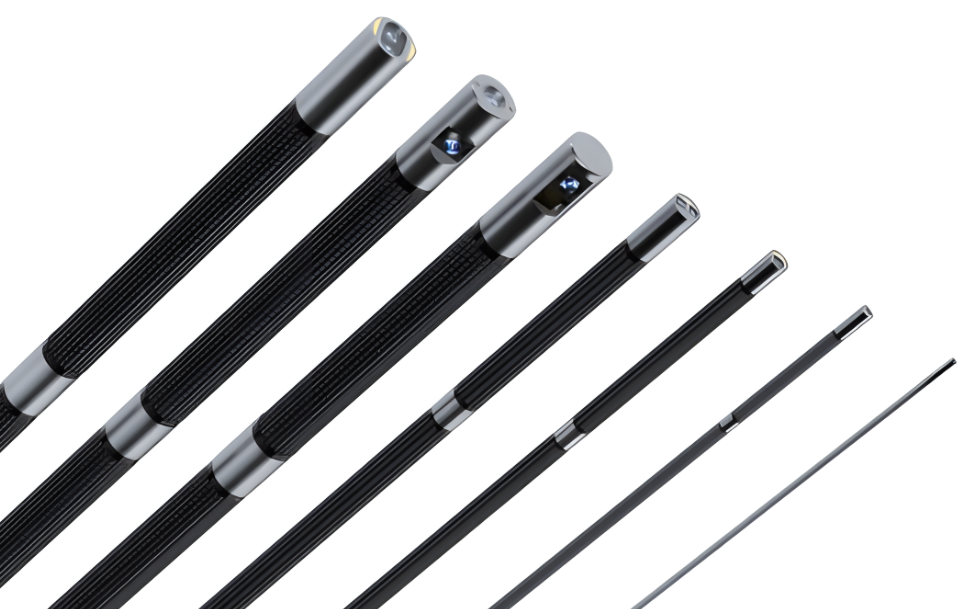
Forward view
Fixed side view
Interchangeable optical adapter view
Single camera systems are commonly used in:
General industrial maintenance
Basic engine inspection
Manufacturing inspection
Cost-sensitive applications
Traditional borescope inspection workflows
Advantages of Single Camera Systems
Simpler internal structure
Lower manufacturing cost
Smaller tip integration complexity
Good reliability
Suitable for compact probe diameters
Easier maintenance and repair
Limitations of Single Camera Systems
Limited viewing flexibility
May require probe reinsertion for different viewing directions
Slower inspection workflow
Higher risk of losing inspection position
What is a Dual Camera Videoscope?
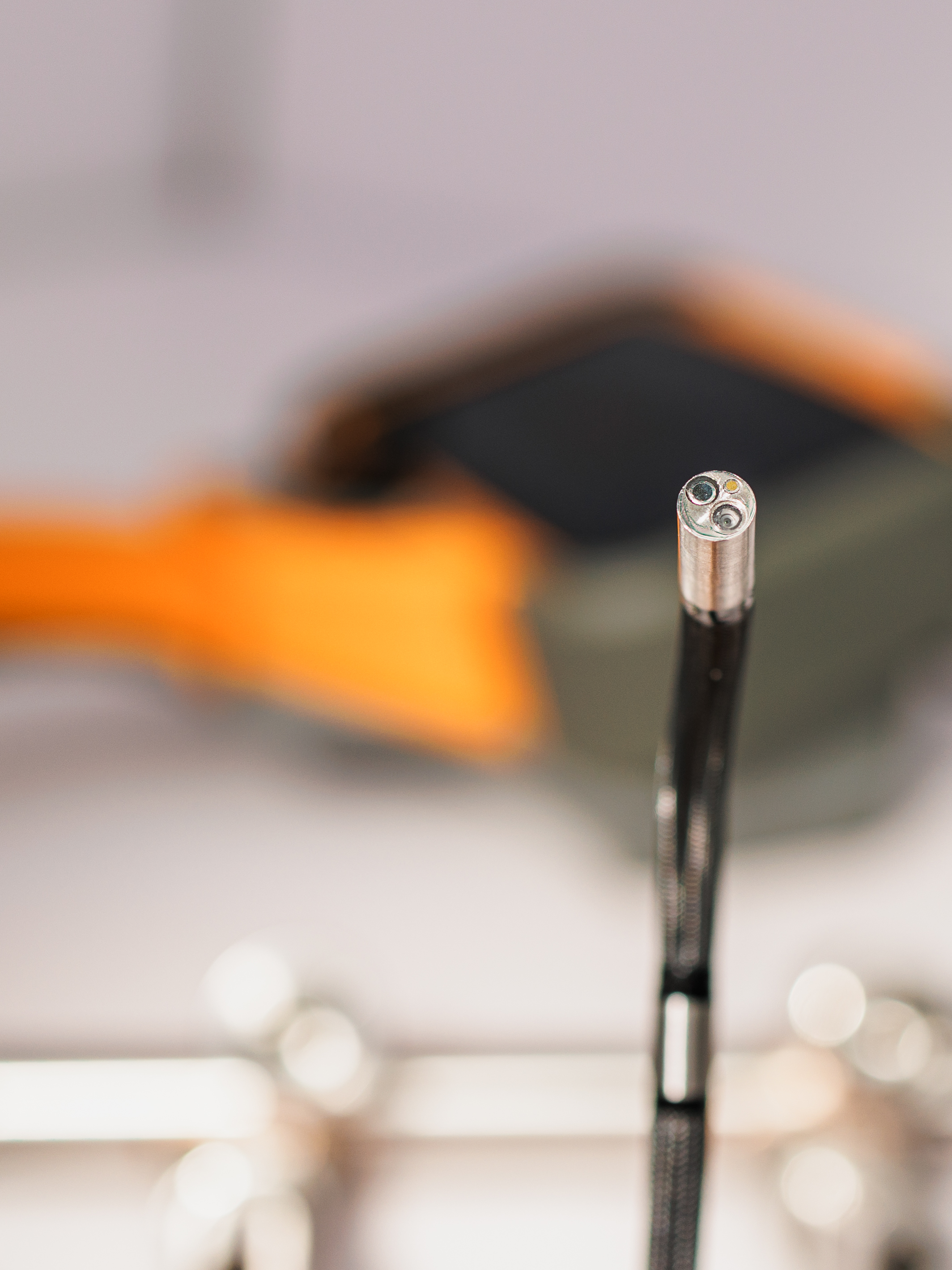
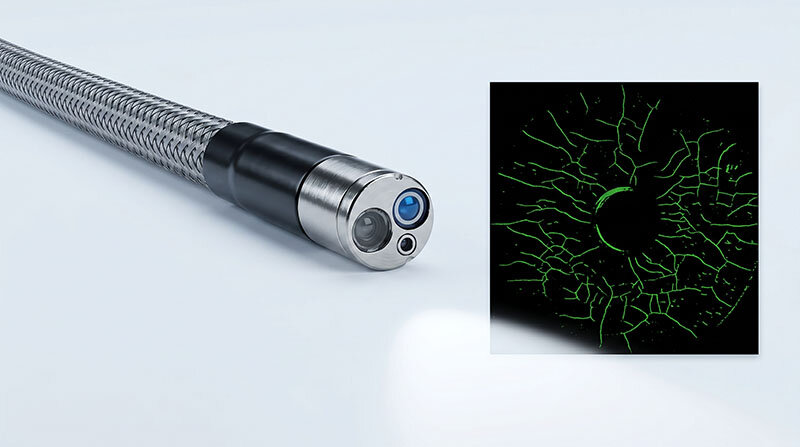
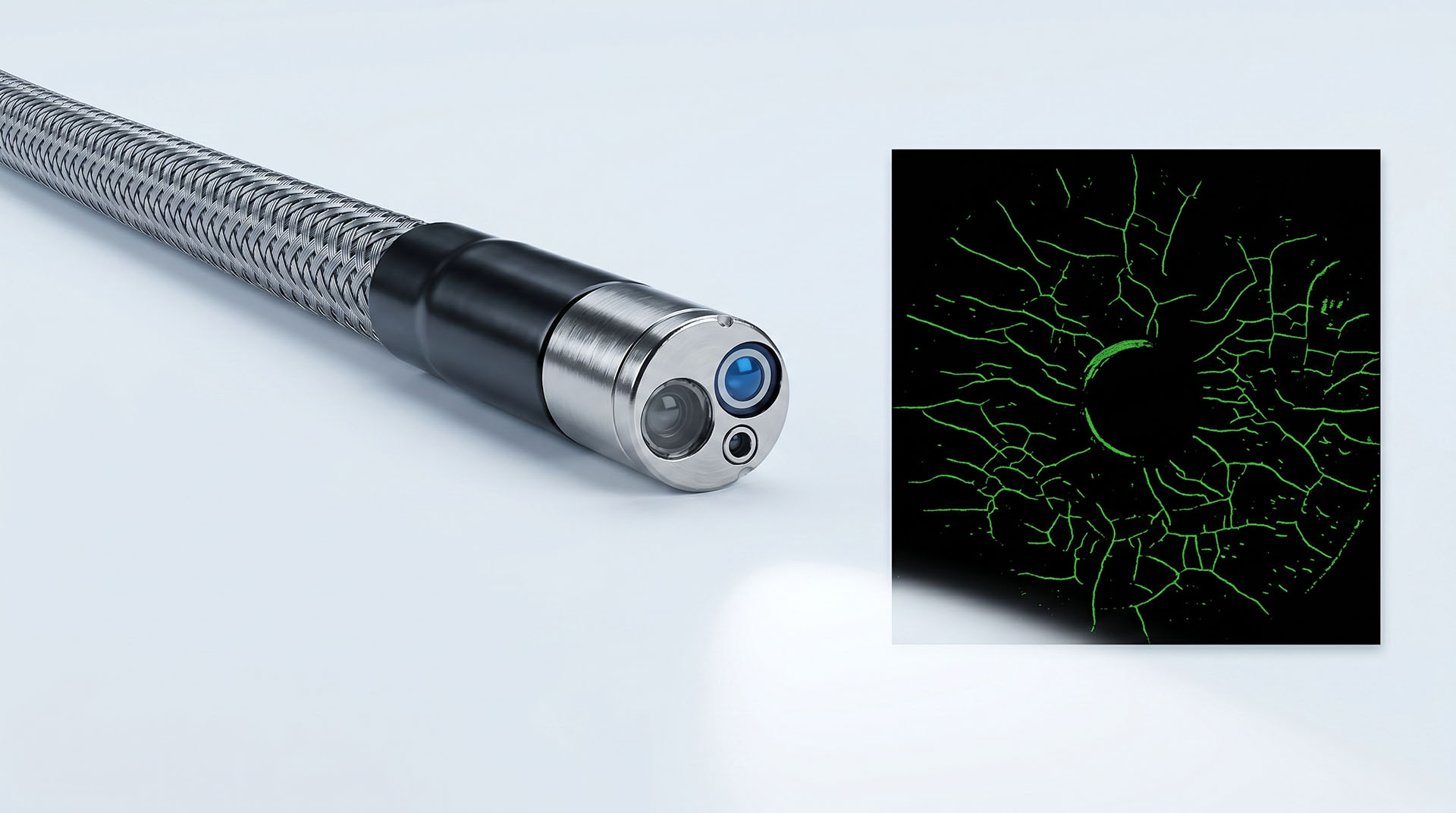
A dual camera videoscope integrates two separate camera modules inside the probe tip.
The most common configuration includes:
One forward viewing camera
One side viewing camera
The user can electronically switch between the two viewing directions directly from the videoscope system.
Dual camera systems are increasingly used in:
Turbine inspection
Aerospace maintenance
Automotive engine inspection
Industrial maintenance
Complex internal inspections
Advantages of Dual Camera Systems
Instant switching between viewing directions
No probe removal required
Faster inspection workflow
Improved inspection efficiency
Better navigation inside complex geometries
Reduced inspection downtime
Lower risk of losing inspection position
Limitations of Dual Camera Systems
More complex internal structure
Higher manufacturing cost
More challenging probe integration
Higher repair complexity
May require larger probe diameters
Comparison Between Dual Camera and Single Camera Systems
| Feature | Single Camera | Dual Camera |
|---|---|---|
| Number of Cameras | One | Two |
| Viewing Flexibility | Limited | High |
| View Switching | May require reinsertion or adapters | Electronic instant switching |
| Inspection Speed | Moderate | Faster |
| Mechanical Complexity | Lower | Higher |
| Repair Complexity | Lower | Higher |
| Typical Application | General inspection | Advanced industrial inspection |
| System Cost | Lower | Higher |
Why Dual Camera Systems Improve Inspection Efficiency
In many industrial inspections, inspectors need both forward and side viewing capability during the same inspection process.
With a traditional single camera system, users may need to:
Withdraw the probe
Install a side-view adapter
Reinsert the probe
Relocate the inspection position
This process increases inspection time and operational complexity.
Dual camera systems eliminate this workflow interruption by allowing immediate electronic switching between camera views.
Why Single Camera Systems are Still Important
Single camera systems remain highly practical because they offer:
Simpler design
Lower cost
Smaller probe possibilities
Better suitability for compact systems
For many basic inspections, a single forward-view camera is completely sufficient.
Probe Diameter Considerations
Integrating two cameras inside a small probe diameter is technically challenging.
The probe tip must contain:
Two image sensors
Two optical systems
Illumination components
Signal transmission wiring
Protective housing
Articulation mechanisms
As probe diameter decreases, dual camera integration becomes increasingly difficult.
This is one reason why ultra-thin probes often use single camera systems.
Typical Industry Applications
Single Camera Applications
Basic maintenance inspection
Manufacturing quality control
Straight access inspection
Cost-sensitive industrial applications
Dual Camera Applications
Aircraft turbine inspection
Automotive engine inspection
Complex industrial maintenance
Inspection environments requiring multiple viewing directions
Practical Industry Trend
Modern industrial inspection increasingly values:
Inspection speed
Operational simplicity
Reduced downtime
Improved workflow efficiency
Because of these factors, dual camera systems are becoming more common in advanced industrial videoscope platforms.
However, single camera systems still remain highly important for cost-effective and compact inspection solutions.
Conclusion
Single camera and dual camera videoscope systems each offer important advantages depending on the inspection application.
Single camera systems provide simplicity, lower cost, and compact integration, while dual camera systems provide improved inspection flexibility and workflow efficiency.
The ideal solution depends on the inspection geometry, operational requirements, and inspection frequency.
FAQ
What is the main advantage of a dual camera videoscope?
The main advantage is the ability to switch instantly between forward and side viewing directions without removing the probe.
Why are single camera systems still widely used?
Single camera systems are simpler, more cost-effective, and easier to integrate into compact probe diameters.
Are dual camera systems more expensive?
Yes. Dual camera systems require additional cameras, optics, wiring, and signal processing components, increasing manufacturing complexity and cost.
Can dual camera systems improve inspection speed?
Yes. Electronic switching between camera views reduces the need for probe reinsertion and significantly improves inspection efficiency.
Which system is better for turbine inspection?
Dual camera systems are increasingly preferred for turbine inspection because they improve navigation and inspection workflow efficiency.
Are dual camera probes more difficult to repair?
Generally yes. The internal structure is more complex due to the integration of multiple cameras and additional signal transmission components.
Can ultra-thin probes support dual cameras?
Dual camera integration becomes extremely difficult in ultra-thin probe diameters due to very limited internal space.
Is image quality lower in dual camera systems?
Not necessarily. Modern dual camera systems can provide high-quality imaging, although probe size and sensor limitations still affect overall performance.